9 things that will come to pass.

I came across this recently thought-provoking list.   It’s a list of 9 things that will pass away in our lifetime, what will your world be like If these pass?   Start thinking and realizing the effect on our life style

Whether these changes are good or bad depends in part on how we adapt to them. But, ready or not, here they come…

1. The Post Office. Get ready to imagine a world without the post office. They are so deeply in financial trouble that there is probably no way to sustain it long-term. Email, Fed Ex, and UPS have just about wiped out the minimum revenue needed to keep the post office alive. Most of your mail every day is junk mail and bills.

2. The Cheque. Britain is already laying the groundwork to do away with cheque by 2018. It costs the financial system billions of dollars a year to process cheques. Plastic cards and online transactions will lead to the eventual demise of the cheque. This plays right into the death of the post office. If you never paid your bills by mail and never received them by mail, the post office would absolutely go out of business.

3. The Newspaper. The younger generation simply doesn’t read the newspaper. They certainly don’t subscribe to a daily delivered print edition. That may go the way of the milkman and the laundry man. As for reading the paper online, get ready to pay for it. The rise in mobile Internet devices and e-readers has caused all the newspaper and magazine publishers to form an alliance. They have met with Apple, Amazon, and the major cell phone companies to develop a model for paid subscription services.

4. The Book. You say you will never give up the physical book that you hold in your hand and turn the literal pages. I said the same thing about downloading music from iTunes. I wanted my hard copy CD. But I quickly changed my mind when I discovered that I could get albums for half the price without ever leaving home to get the latest music. The same thing will happen with books. You can browse a bookstore online and even read a preview chapter before you buy. And the price is less than half that of a real book. And think of the convenience! Once you start flicking your fingers on the screen instead of the book, you find that you are lost in the story, can’t wait to see what happens next, and you forget that you’re holding a gadget instead of a book.

5. The Land Line Telephone. Unless you have a large family and make a lot of local calls, you don’t need it anymore. Most people keep it simply because they’ve always had it. But you are paying double charges for that extra service. All the cell phone companies will let you call customers using the same cell provider for no charge against your minutes

6. Music. This is one of the saddest parts of the change story. The music industry is dying a slow death. Not just because of illegal downloading. It’s the lack of innovative new music being given a chance to get to the people who would like to hear it. Greed and corruption is the problem. The record labels and the radio conglomerates are simply self-destructing. Over 40% of the music purchased today is “catalogue items,” meaning traditional music that the public is familiar with. Older established artists. This is also true on the live concert circuit. To explore this fascinating and disturbing topic further, check out the book, “Appetite for Self-Destruction” by Steve Knopper, and the video documentary, “Before the Music Dies.”

7. Television. Revenues to the networks are down dramatically. Not just because of the economy. People are watching TV and movies streamed from their computers. And they’re playing games and doing lots of other things that take up the time that used to be spent watching TV. Prime time shows have degenerated down to lower than the lowest common denominator. Cable rates are skyrocketing and commercials run about every 4 minutes and 30 seconds. I say good riddance to most of it. It’s time for the cable companies to be put out of our misery. Let the people choose what they want to watch online and through Netflix.

8. The “Things” That You Own. Many of the very possessions that we used to own are still in our lives, but we may not actually own them in the future. They may simply reside in “the cloud.” Today your computer has a hard drive and you store your pictures, music, movies, and documents. Your software is on a CD or DVD, and you can always re-install it if need be. But all of that is changing. Apple, Microsoft, and Google are all finishing up their latest “cloud services.” That means that when you turn on a computer, the Internet will be built into the operating system. So, Windows, Google, and the Mac OS will be tied straight into the Internet. If you click an icon, it will open something in the Internet cloud. If you save something, it will be saved to the cloud. And you may pay a monthly subscription fee to the cloud provider. In this virtual world, you can access your music or your books, or your whatever from any laptop or handheld device. That’s the good news. But, will you actually own any of this “stuff” or will it all be able to disappear at any moment in a big “Poof?” Will most of the things in our lives be disposable and whimsical? It makes you want to run to the closet and pull out that photo album, grab a book from the shelf, or open up a CD case and pull out the insert.

9. Privacy. If there ever was a concept that we can look back on nostalgically, it would be privacy. That’s gone. It’s been gone for a long time anyway. There are cameras on the street, in most of the buildings, and even built into your computer and cell phone. But you can be sure that 24/7, “They” know who you are and where you are, right down to the GPS coordinates, and the Google Street View. If you buy something, your habit is put into a zillion profiles, and your ads will change to reflect those habits. “They” will try to get you to buy something else. Again and again.


Thought of Giving Up?

The woman who would not give up

 Society all around us is in so much flux, our world is at a pace of change from one day to the next we wonder what will come next.    I come across many who just want to find rest and make a fundamental adjustment to bring peace.    Others who have had enough so to speak, they have tried and tried again but things have worked, what ever the ‘thing is for their life.

We live in a world that constantly speeds things up, instant, immediate delivery, drive thru’s not only for food but for banks, waiting for many has become an alien pastime.     Farming and waiting for a harvest is so far removed from many of us today, this is one factor in us losing the art of cultivation, to get a harvest, our harvest today is determined by the fields of fresh food in our supermarkets rather than watching the green shoots raising, waiting for the produce to grow and mature to bring about harvest time.   Being distant from the soil disconnects us from some of life’s schooling, being patient and persistent for example.    Perhaps a modern parable, rather than one of the soil is this one, I am writing this while in Cape Town with its ‘fast speed’ broadband computer connection, that is as it is sold by Telekom, the government telephone service.    The advertised ‘fast speed’, FAST SPEED!    It is 384 kbps; about half the speed of the old dial-up-network, that old buzzing hissing noise connection, where Virgin/UK are advertising 20 MB speeds.   You can purchase an even FASTER speed of 1 Mbps but its at double the cost for the line!   I give up downloading or uploading as its so slow, I give up waiting and persisting, it takes so long, even some necessary downloads i delay until I get to a faster environment.

We struggle to wait and be patient, wanting things NOW, we don’t wait and persevere so easily, we want to see things advancing or we determine it is not working.

We even do strange things, in reading the Scriptures, because we can read the book of Acts in one weekend, we think it all happened in 48 hours.   We treat our Christian walk in the same way, thinking it all happens in a weekend, but from Paul’s encounter with Christ on the Damascus Road to his standing before King Agrippa, it was a 20-year period.    We see every miracle, healing breakthrough in terms of immediate rather than reality, and we expect it all over and done with in a weekend.    By the way, this is not an appeal not to see the immediate work of God but one that adds to us as we have to learn the cultivating and preserving journey of our faith as well.   As we learn to see the immediate and the long-term, it gives sense to our daily lives, i hope.

Through out the scriptures we are introduced to people who stayed in, persisted when nothing was happening to the natural eye.   Introduced time and time again to a quality of living that is patient, persistent, consistent, staying in.

Two women for you to consider, just don’t switch off on me now, consider these to be shadows of the bride of Christ, the church and outlining attitudes that we find in the church.    The first being Mary the mother of Jesus who having had been delivered the earth shattering news of the plan for her life, in giving birth to Jesus having said “be it unto me” learned to cultivate the promise, she held it in her heart, quietly with drew and cultivated the word until it become a living promise in the arrival of her son.  Until the word arrived at a place where it could sustain life in itself, interesting thought, how many times have we left the word go before it had life enough to stand by its self, when it still needed our cultivation?     She shows us the attitude of how to cultivate all that God speaks to us.   There will be the gift of time delivered to us, so that we can cultivate the promise of God, to work with the words to bring it to pass, maturing it first in the inner life before we see it fully.    She knew its reality on the inside but it did take a while, 9 months, before it hit the seen realm.   The evidences of the promise had a challenged effect on her relationships and as her physical body changed shape to align with the promises, we are to stay in hold on too, being persistent as we change to bring about the promise, that more often for us all takes time.

The next woman who would not give up reading Luke 18:1-8, It’s the parable of the Woman Who Would Not Give Up. She was unrelenting in her pursuit of an answer to her plea.    This parable is a standard Jewish “how much more” (qal vahomer) argument: if an unjust judge who cared not for widows can dispense justice, how much more will the righteous judge of all the earth. Who was known as the defender of widows and orphans?      It was in a day when it was difficult for widows to get justice because they lacked the means for bribing the officers who would get the judge to act.   But this widow would not quit until the judge had given her what she was supposed to get.      You and I are to adopt the same attitude of faith.     More than that the church of God requires the same attitude of faith.    In recent years I have heard people use the phrase of “failed revival theology” a sadness from not seeing what we thought, or we thought by now the Kingdom of God would have arrived and transformed our worlds.    It is necessary for us again to take up this woman’s attitude to persist a little while longer.

I don’t know about you but I long for the church to be known as a people of faith who will not give up but press through, I want to be known as a man of faith who will not give up.   What i see must be big enough; my message must be big enough to keep me persistent.   I must add that God is not unwilling at all but I would focus this on us and our attitude not the Fathers willingness.

Jesus asks his disciples, “When I come, will I find faith in the earth?” As you meditate on this verse consider this:

“Will I find faith?” Jesus asked His disciples, “When I come…will I find faith?” When we have asked for something over and over, and there is no answer, we are tempted to give up, to give in to unbelief. Jesus, knowing the weakness of His disciples both then and now, taught this parable about faith through unrelenting, persevering prayer. A widow who would not give up she persisted, she would not give up. With that in mind, lay hold of what you have seen and the big message Christ brought.

“When I come…” We don’t know when Jesus will come or how he will return with the culmination of every promise made, but when He comes I want to have faith in my heart. By His grace, I will have faith.

‘Nevertheless, when the Son of Man comes, will he really find faith on the earth?’ (v. 8). This implies that faith is often strengthened by waiting on God and persistence in prayer, even if we do not receive immediate answers. Job had faith to recognise the goodness of God even when, humanly speaking, all seemed lost (Job 23:8–10).

Persist, persevere, staying in, keeping faith, are all necessary attitudes for our journey how are you’re doing? Given up doing good, don’t let go of promises learn to stay in and hold your heart, keep the faith and watch it grow.

Money, money and all that

Interesting thought from a book written by Craig L. Blomberg on “A Christian View Of Possessions”, an academic, his expertise and fields of research are Economics and Hebrew he writes “More than a billion people out of the earth’s seven billion inhabitants live in desperate poverty.  Natural disasters, war, corrupt governments, lack of education, human greed, disease, unfair trade laws, false religions all play their part in creating this situation.   Conservatively, at least 200 million (1/5th) of these poor are Bible-believinng, born-again Christians”.

In taking on board his comments we today as Bible-beliveing Christians worldwide, heralding the coming of the Kingdom of God cannot see it as someone else’s responsibility be the answer, we must be part of the answer.   The Kingdom of God is not only miracles and healing, if this is our only focus we will be distracted from the fuller gospel of the Kingdom.

He goes on to say that just in America, let alone the remaining world “…over the last 30 years Christians have changed their spending patterns…the amount of money spent on non-essentials as sports and recreation, lawn care, video and computer games, home entertainment centres, pets and dieting has skyrocketed. At the same time Christians per capital giving to causes of all kinds has steadily declined in the last 40 years from just under 4% of their total annual income to barely above 2%”.

He then delivers a punch with “…trend watchers have made two staggering calculations…firstly if every USA Christian simply tithed, the additional amount of money that would be raised above and beyond current giving levels would be enough to eradicate world poverty in our lifetime.  Secondly the average age of major donors is now, for the first time ever, well over sixty-five.   Current Christian work is being funded largely by retired people.   Unless we change, in less than a generation the majority of ministries and good works will close their doors in reaching the poor.”

I write this with these thoughts, if we all saw the biblical, not tradition instruction on money, seeing the tithe as an answer not something to fight against, along with the biblical necessity of financial stewardship as part of a working answer perhaps a difference would dawn in our world.    If the whole church tithed worldwide, not just Europe or the West, but the whole church, we could eradicate world debt in less than 15/20 years.   What a powerful argument, of course we would need to agree to stop investing further in internal building programs, adding to men and women’s egos, running  bigger and better and getting more cut of the Christian market share.   We would need to distance our selves from the annual $7 billion Christian market but taking up the Apostolic & Biblical direction “never to forget the poor”.     Truly this would be the Isaiah 2:2, 3 “In the last days the mountain of the Lord’s temple will be established as the highest of the mountains; it will be exalted above the hills, and all nations will stream to it. Many peoples will come and say, “Come, let us go up to the mountain of the Lord, to the temple of the God of Jacob.  He will teach us his ways, so that we may walk in his paths.”   It will not be governments of politic or polices but the people of God that will have dealt with world poverty, this is truly the Kingdom of God coming to earth!

Before you get the wrong idea I am certainly not against buildings or exiting programs as we reach our world far from it.    However we are told that only 4/6% of the church worldwide actually tithes, and we all would admit the church downs amazing on that alone but the thought is not to affect existing budgets or support at all but just to apply the other 96/94% increase of giving and see what we can change?

 Join with us in changing our spending habits, join with us in making a difference with others while being the instructive Mountain of God, join and make  a difference rather than allowing the church to be something other than the Father has in his ultimate intention.    Being a different kind of people who creation awaits for sons of God led by the Spirit.
For the West he says lest get delivered from “…the already affluent becoming richer…” or let us not think about the well-to-do Christians “…trade places with the poor…” for both extreme prove un-biblical and prevent any action.
Let us join and become the Kingdom heralding, called out people of God bring a world answer!    Its time to truly study the scriptures and discover the real answers that has been outline there in about financial stewardship.

“Doing God” or prelude for Revival to become a “season of Restoration” in UK?

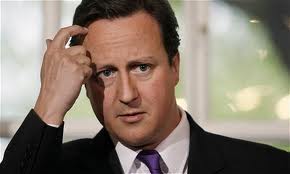
The God Question in politics again, it hits the news again!    2012 has become a year that our Christian faith has been brought to the centre of many debates on many issues, it is certainly causing conversations and comments.    It’s not the church that has achieved this directly but the Prime Minister and the Queen.   The Guardian wrote  “At an Easter reception in Downing Street, David Cameron ventured where even Tony Blair feared to tread, quoting from the Gospel of Luke, speaking of ‘we Christians’, and welcoming the Christian ‘fightback’. ‘The values of the Bible, the values of Christianity, are the values that we need’, he said. In your view, is it acceptable for a modern prime minister to espouse Christian values so openly?”

Ok consider for your self, with David Cameron’s own words, what will resound into in our world, if declarations has any authority, the supernatural realm has certainly had many words from the Queen’s speech at Christmas,  Cameron’s words  at the celebration of 400 years of King James Bible, now more words from David Cameron.     We will all wonder what did the UK Prime Minister mean by this or that, what ever he has meant by these words he certainly has spoken of a regaining of Christianity at the forefront of the UK.

Are these just words or a contributing to a preparing Revival bringing about a season of  Restoration (Acts 3:19-21)?     Bringing Christ to the forefront of people’s minds in a country that is economically challenged , challenges on National identity what does it mean to be British, social challenges, young feeling isolated and more disenfranchised, education being undermined by budgets and Christ, faith being put right into the middle of it all.  An appeal for a Christ faith to take place in the ‘Big Society‘, perhaps to be the lead,  of a community of faith, a community of restoration, a community of recovery in the UK making a difference because of our Christ.

My next post will be David Cameron’s words read and consider your self

The question of “doing God” in UK politics David Cameron’s words

British Prime Minister David Cameron’s “Christian Fight Back” speech, made at Downing Street to Christian ministries from across the denominations 3 April 2012.

“The Christian Fight Back….”?    whats the PM going on about? Here is the full script:

“As you know, we have receptions here for Diwali, for Eid, for Jewish New Year, and I think it is right and it is proper in a Christian country to celebrate this – the most important of the Christian festivals, Easter – right here in Downing Street. So I’m very proud to have brought together such a prominent group of Christians in so many different walks of life, so many different charities, so many different churches. I think it’s a great event that we have it and I’m proud to hold it again. And it is, as I said, we obviously spend a lot of time celebrating Christmas and thinking about Christmas, but actually, really, Easter in many ways is the one that counts. Even those of us who sometimes struggle with some parts of the message – the idea of resurrection, of a living God, of someone who’s still with us – is fantastically important even if you sometimes, as I do, struggle over some of the details. It’s a very important message. It’s a message of hope.

What I wanted to say to you today, really, I think I’ve got three points, one plea and two challenges, if that’s all right. The three points are these: the first thing is: I think there is something of a Christian fight-back going on in Britain and I think that’s a thoroughly good thing. I think you could see it in the enormous reception of the Pope’s visit; I think you could see it with the successful return visit that Sayeeda Warsi led. I think you can see it, actually, in the reception to Sayeeda’s superb speeches about standing up for faith and celebrating faith and, as she so famously put it, actually doing God in Britain. So I think you can see it in those things. I think you could also see it in the very happy celebration of the 400th anniversary of the King James Bible. I think that was another event that helped in this Christian fight-back, and I think there have been one or two good examples of the Christian fight-back as a thoroughly good thing: the fact that we’ve had that argument and won that argument over Biddeford Council and the fact that if councils want to say prayers before council meetings they should. We do in the House of Commons, why on earth shouldn’t local councils do that as well? I think we see the fight-back in this very strong stance that I’ve taken and others have taken in terms of the right to wear a crucifix. I think this is important. People should be able to express their faith, and so I think there’s something of a fight-back going on and I think we should welcome that.

The second point I want to make is: I hope that the fight-back will be based around values more than anything else. I think that we have lots of things going for us as a country, all sorts of difficulties and challenges, but the greatest need we have in our country is to have strong values and to teach our children and to bring people up with strong values. The values of the Bible, the values of Christianity are the values that we need – values of compassion, of respect, of responsibility, of tolerance. Now, I’ve made this argument many times that you don’t have to be a Christian or you don’t have to adhere to another religion to have strong values, to believe in strong values or to pass those values on to your children, but the point I always make is that it helps. We’re always trying to tell our children not to be selfish, but is there a better way of putting it than ‘love they neighbour’? We’re always telling our children to be tolerant – I know I am, and often a fat lot of good it does me – but is there a better way of explaining tolerance than saying, ‘do to others as you would be done by’? It’s the simplest encapsulation of an absolutely vital value and the Christian church and the teaching of the Bible has put it so clearly. We’re always telling our children that they must make the most of what they have; they must not waste what they have been given, and is there a better way of putting that than ‘don’t hide your light under a bushel, make the most of your talents’? So I think that Christian teaching can help us to have the strong values that we need as a country and we should be celebrating that and shouting about that.

The third point I want to make, and I think this is part of the Christian fight-back, is we should be very proud of the institutions that the churches in Britain support. I think, particularly in an age where we’re really making some progress on improving levels of attainment in school, we should celebrate the link there is between churches and schools, and indeed between mosques and schools and synagogues and schools. Faith has a huge amount to bring not just to our national life in terms of values; it has a huge amount to bring in terms of strengthening our institutions and I think it’s a good time to celebrate that.

Now my plea: my plea is that I hope that in spite of the disagreements and the arguments we will undoubtedly have, the plea is that I hope we don’t all fall out too much over the issue of gay marriage. Let me just make this point. What the government is consulting over is a change to civil marriage, to what happens at the registry office. It’s not consulting over what happens in the church. I’ll just make this point, which is that inevitably there’s a consultation, inevitably there will at some stage be a vote and inevitably there’ll be some quite strong arguments between now and then, and there’ll be some strong words used. But I hope we can keep the strength of the language at a reasonable level and that goes for both the proponents of gay marriage and indeed the opponents of gay marriage.

The point I’d make is this: if this does go ahead it will change what happens in a registry office; it will not change what happens in a church. If this doesn’t go ahead, to those of us who’d like it to go ahead, there will still be civil partnerships, so gay people will be able to form a partnership that gives them many of the advantages of marriage. So I hope we can just keep the debate at a rational and sensible level, but on the basis that we’re not always going to agree. That was my plea.

Now let me go to my two challenges. The two challenges are these. The first one is overseas and the second one is at home. The one overseas is this: I think there’s huge potential for what I call and what others call the Arab Spring and the growth of democracy in the Middle East, but there’s also an enormous danger in terms of the persecution of minorities and particularly the persecution of Christians. Now, Britain is fully engaged in the world; we have the second largest aid budget of any country in the world. We’re one of the few countries keeping our promise to spend 0.7% of GDP on aid, and we do have real influence, real heft in these countries. I think there’s a really important moment, and this is the challenge, is for the churches and Christians to work together with government on agendas to persuade these newly democratising countries not to persecute minorities and to respect Christians the world over and the right to practise your religion.

The domestic challenge is, and you’d be surprised if I didn’t bring it up, the issue of the Big Society. I think there is enormous potential in churches and faith-based organisations to tackle some of the deepest problems we have in our society, whether it is educational and under-attainment, whether it is homelessness, whether it is mental health. Just wandering around the room chatting to some of you, I was talking to a lady who runs very important residential clinics for young people who have been self-harming or indeed have eating disorders – a classic example of someone of faith who has a great belief in wanting to do good, in wanting to change the world and we should be encourage those faith-based organisations into the solving of social problems.

Tomorrow I am going to be going to the City of London, not to make a speech about the importance of the City raising finance for business, but on the importance of the City raising finance for society. Big Society capital in effect with the Big Society Bank is going to make money available so that organisations, that social entrepreneurs in this room can take that money and expand their social enterprise to cover different parts of the country or to make it bigger to solve bigger problems, to take on bigger challenges. This is an agenda that I think is vital for the future of our country; it’s one that I’m passionate about, but I think it gives the biggest possible opportunity for churches up and down the country to have a real social mission as well as having a moral, religious and a spiritual mission. I think it’s a great opportunity for faith to show its power to move mankind, to move mountains, to get things done.”