Who, what did any one say anything?

GOD SPEAKS, from Genesis to Revelation BIBLE STUDY:   From Scripture’s beginning to its end, the message is clear: God speaks. The Bible opens with “and God said” (Gen. 1:3) and closes with, “I, Jesus, have sent my angel to give you this testimony for the churches” (Rev. 22:16).
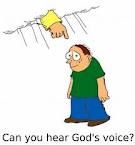
Yet we can become so familiar with the words God said that we never stop to ask, How did God speak? Did people hear Him audibly? See Him? Somehow “know” that something in their hearts was from Him? Looking at scriptural examples of when and how God spoke can give us insights into how we continue to hear Him today.

Ways God Spoke

When we look at biblical passages to discover how God spoke, we find the following categories.

a. “God said.” Sometimes, we don’t see an indication of how God spoke, just that He did. We’re only told “God said” (Gen. 6:13) or “the word of the Lord came” (1 K. 16:1) or “the Lord appeared” (Gen. 26:2).

b. Face to face. In Gen. 3:8–9, we get a hint of one way God communicated—face to face—when we read that Adam and Eve “heard the sound of the Lord God as he was walking in the garden in the cool of the day.”

c. Audible voice. Some people didn’t see God, but they did hear an audible voice (e.g., 2 Pet. 1:16–18). Often this audible voice was accompanied by a physical phenomenon such as a light, storm, cloud, or fire.

d. Angel. God often sent angels as messengers. In fact, the Hebrew and Greek words translated in English as angel mean “messenger,” “representative,” or “envoy.” (Note: In some passages, such as Judges 13, the name “the angel of the Lord” might refer to a physical appearance of God Himself.)

e. Dream or vision. Often people heard God, or talked with Him or with angels, in dreams or visions. God also showed people pictures or scenes in dreams (Daniel 7). Sometimes the person who had the dream or vision needed help interpreting the message he had just received (Daniel 2).

f. The Holy Spirit coming upon or moving in a human. Another form of communication occurred when the Holy Spirit “came upon” a man or woman, and the person began to speak out, prophesy, praise God, or speak in tongues (1 Sam. 10:9–11). At other times, God or the Holy Spirit moved “inside” a human’s mind or heart (Ezra 1:5).

g. Message or prophesy through other humans. Just as God sent angels as His messengers, He also sent messages through other people (1 K. 12:22–24). Sometimes the messenger is identified as a prophet or prophetess (e.g., Moses and his sister, Miriam, in Ex. 15:20 and Dt. 34:10) and the message as a prophecy or oracle.

h. Urim and Thummim/casting lots. We also see God answering people’s questions through the Urim and Thummim and the casting of lots. We know little about the Urim and Thummim, only that they were physical objects (see Ex. 28:30). We’re also not told the mechanism people used to “cast lots.” An interesting variation occurs in Josh. 7:14, where, after God speaks clearly and directly to Joshua about sin in the camp, He stops short of revealing the troublemaker. Instead, the guilty man is “taken” through an unspecified process of identification.

For the following passages, record whom God spoke to and check the appropriate column to indicate the method He used. (Match the categories to the descriptions above.) Sometimes you’ll see multiple methods in the same passage.

Though this list seems long, it’s only a brief overview. Because we had to draw the line somewhere, we’ve mostly drawn from the Old and New Testament historical books, skipping the Old Testament prophetic books entirely.

WAYS GOD SPOKE

a. “God said”

b. Face to face

c. Audible voice

d. Angel

e. Dream or vision

f. Holy Spirit came upon or moved

g. Human messenger

h. Urim and Thummim/casting lots


WHO RECEIVED THE MESSAGE?

HOW DID GOD SPEAK?

NOTES & OBSERVATIONS

a b c d e f g h
Gen. 3:8–9                    
Gen. 4:6                    
Gen. 15:1                    
Gen. 18:1–2                    
Gen. 20:3                    
Gen. 21:17                    
Gen. 25:21–23                    
Gen. 32:24–30                    
Gen. 35:9                    
Gen. 41:15–16, 25                    
Gen. 46:2                    
Ex. 3:2–4                    
Ex. 33:7–11                    
Num. 11:24–29                    
Num. 22:9–35                    
Num. 27:21                    
Dt. 5:22                    
Josh. 1:1–2                    
Josh. 5:13–15                    
Josh. 18:8–10                    
Jdg. 2:1–5                    
Jdg. 4:4–6                    
Jdg. 6:6–11                    
Jdg. 7:9–14                    
Jdg. 13:24–25                    
1 Sam. 2:27                    
1 Sam. 3:1–15                    
1 Sam. 19:19–24                    
2 Sam. 23:1–2                    
1 K. 3:5                    
1 K. 20:35–43                    
1 K. 22:1–28                    
2 K. 20:1–5                    
2 K. 22:10–15                    
1 Chron. 21:8–11                    
1 Chron. 28:11–12                    
2 Chron. 21:12                    
2 Chron. 35:20–22                    
Ezra 1:1                    
Neh. 2:11–12                    
Job 38:1                    
Mt. 1:18–20                    
Mt. 2:19–22                    
Mt. 3:16–17                    
Mt. 4:1                    
Lk. 1:11–13                    
Lk. 1:26–27                    
Lk. 1:41–42                    
Lk. 1:67                    
Lk. 2:25–35                    
Lk. 2:36–38                    
Lk. 9:28–36                    
Lk. 10:21                    
Lk. 24:1–8                    
Jn. 1:14                    
Acts 1:10–11                    
Acts 1:24–26                    
Acts 2:1–4                    
Acts 4:5–13                    
Acts 7:55–56                    
Acts 8:26, 29                    
Acts 9:1–7                    
Acts 9:10                    
Acts 10:3–7                    
Acts 10:9–16, 19                    
Acts 11:27–28                    
Acts 13:1–2                    
Acts 13:9–10                    
Acts 16:9                    
Acts 18:9                    
Acts 19:6–7                    
Acts 21:10–11                    
Acts 23:11                    
Acts 27:21–26                    
Ro. 8:16                    
2 Cor. 12:1–2                    
2 Cor. 12:8–9                    
Heb. 1:1–2                    
2 Pet. 1:20–21                    
Rev. 1:1, 9–11                    
Rev. 22:8–11                    

WRAP IT UP

After you’ve finished looking up the passages, here are some questions to consider.

• What observations struck you as you looked up these passages?

• Did anything surprise you or challenge assumptions you held about how God speaks?

• Did you see any differences between how God spoke in the Old Testament and how He spoke in the New Testament?

• Did you sense God saying anything to you personally as you read these passages?

• Is anything you read likely to change your own conversations with God? If so, how?

• Write a summary statement of what you most want to remember from this study.

GOD STILL SPEAKS!   How is that effecting me?

Leadership while sitting Continued – lessons from a cyclists seat.

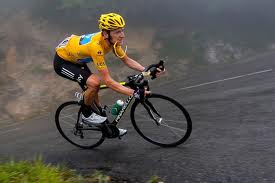
Heralded as the greatest cycling Olympics ever, the London 2012 velodrome has become a golden event at least 7 golds and a few other silver and bronze medals for the UK, from speed trials, team sprint, omnium producing Gold medals.   Cycling lessons will be written and debated for many years in team strategies and life’s forums I am sure.   Watching the interviews of the team trainer works and how his strategies shave produced such a golden team.   His comments of breaking down each event and dealing with the little things, then all the little changes amalgamate to make big advances.  In their own right these little changes are insignificant yet together in the overall achievement great advance.  Changes such as even down to how a cyclist would wash their hands.

Even before the golden advance in the velodrome we began in the last blog to enjoy some of the benefits in lessons from a bicycle seat, looking at Lance Armstrong’s‘ advice  in building team.    We will now continue without any more introduction looking at some noteworthy thinking and how it affects the life of a Christ follower.

Lance Armstrong outlines practical insights to gain advance for our consideration.

  • No matter what the cards are that life deals you, you have to make the most of it.   

For all of Lance’s athletic prowess, one thing that he could not control was the fact that he developed testicular cancer. This cancer later spread to his brain and he developed a brain tumour. For a while, it looked as though Lance was losing the battle against cancer. Yet he kept fighting. At the same time, he kept winning. Many people would have given up in those circumstances. Yet, not only did he not give up, he triumphed against adversity, winning races while suffering from cancer.

The bible teaches us that our lives are not about amassing but much more about producing the character of the Son in our lives becoming like the Christ and being sons of God this is our goal, that He might fill all in all.   In other words life is about producing what the scriptures call ‘Overcomers’ that we are to overcome rather than duck and avoid life.   So many people duck responsibility avoid accountability and even rebuke the challenges, bind them in prayer and cast them out when they have been presented with overcoming opportunities.

We hear many say that they are a transitional generation for example they are  a  bridge to the generations or racial gaps, what ever gaps really, yet so often when we are presented with the gifts of transition we tend to think that they are evil and from satan, but they are actually gifts to bring transition and cause us to overcome.

  • Every race starts with a single rotation of the wheel.

To achieve great things, you have to first achieve the little things.  A long-distance race victory doesn’t just happen instantly, it has to begin somewhere and from those many rotations of the wheel, victory followed.    Every little press down of the foot to create another rotation of the wheel counts, or you could say every small event makes the big picture work.    Someone once said ‘the sea is made of water droplets’, for you and I we only see the sea and push aside the little drops that make it up as we only want or value the big, great, yet the small pushed aside are where life is at really.

  • Preparation.

For a race that would last days, he would spend all year round training hard and competing in other events. He was known to push himself to extremes in training, more-so than most endurance athletes.

We are encouraged through the scripture to be shrewd and wise taking a view of the culmination of Gods purpose and not to live in the shallows of now only.   Is this not the encouragement of “without a vision people are unrestrained (perish)” it is about having a view which demands a long-range.   To be expectant of the return of Christ yet plan for the long-term future, it’s the tension of living the ‘now and not yet’ making provision for the long haul and the immediate.

  •  Do not doubt yourself when others doubt you.

For a large portion of his career, Lance had to put up with doping allegations made against him, many of them made by former team-mates. Some of these allegations could perhaps be attributed to jealously.     Being accused of something, particularly by former friends, can be quite upsetting. Much speculation remains on whether or not Lance took performance enhancing drugs, and it’s likely to follow him the rest of his life.

Believe that God has chosen you, empowered you equipped you don’t let others hold you back or their insecurity or control pull down what God has promised.   See through Gods view on your life.   ‘Enduring for the joy set before’ was the Jesus style of life that  is distracting challenge our wills, some times challenges makes us wonder yet there was a joy in Christ of knowing what God wanted of Him the Christ.   Don’t take on other people’s feelings, live in the inner life of God.

  • Family is important.

Winning is important. But it’s not everything. Despite his hectic training schedule, Lance Armstrong still found time to father five children.

A Family is what  God is after, the church is the family of God we must see this as important beyond anything else, to be a family and model a family at every level.    To prevent the church becoming organisational and remain as a family that the influence, leadership and stability of the community of God, the church comes from mothers, brothers, fathers and sisters.  For this is the governments of the church, there will be the functional apostles, prophets etc., reproducing the very same in a people,  yet these functions are fathers, mothers, sisters and brothers but certainly not positional but relationship in a family.   It’s a challenge in our day as we cross to business models, which there is nothing wrong with business in its sphere yet the church crosses and finds little true relationships, as we take on cooperate models and realise we are about filling the earth with a person not business strategies we are FAMILY, the FAMILY OF GOD together, the Christ like corporate body, the image and likeness of the Father.

  • The determination to succeed.

His drive to become the best was phenomenal. It is all the more incredible to have succeeded so often in an endurance sport. Unlike many other sports, endurance sports are not won with one play, or a short period of maximum effort. They require maximum effort over a long period of time.    To win one Tour de France title is incredible, to win it seven times is something else.

Jesus set his ‘face like flint’ he determined his direction, he asked can ‘this cup be taken away’ then concluded ‘not my will but yours be done’ he determined to finish.   Paul said ‘I have run the race…I have finished the race‘ determination to get to the end, the old idiom that goes ‘the measure of a person is in how they finish, finishing well’

  • Do not get complacent.

Once you have achieved your goals, there’s always the temptation to sit back, relax and enjoy your success. After the first few Tour de France wins, you would forgive Lance for slacking-off training a little. After all, he had accomplished great feats. Yet Lance wasn’t happy with just one or two wins, he wanted more. Even as he was rapidly approaching middle-age and suffering from a terrible disease, he kept going.

You could say of Lance ‘He put the same amount of determination into his last victory as he did his first one’.    Don’t let your world become small and just survive, it seems some times that life throws all at us to produce this,  but we must not be complacent.     Knowing if God who started something ‘will complete it’ as Paul put it can we join in with that same essence and life to complete what we start and not get complacent?

  • If you have succeeded at anything, there’s always more to do.

No matter what life throws at you, with the right frame of mind you can overcome. Even when life is cruel. And when all others doubt you, you can go that extra mile and become the best in the world.

We are OVERCOMERS in Christ, who can separate us from the love of God, all these are there so we know and experience that we can be those who get through and accomplish the goal of God for all creation.

Leadership Lessons while sitting down, leading from a bike!


Olympic fever has hit the Uk having had the most successful day ever in the competitive day at London 2012 yesterday, Thursday 3rd August so the news casters report.    I wonder how many people will take up some kind of sport from all that’s going on shooting, rowing judo and of course cycling.   Cycling has captured people’s imagination with Sir Chris Hoy, Bradley Wiggins and co.

A number of years ago a friend introduced me to another great cyclist who put pen to paper regarding his own experience of the sport, bringing lessons to leadership, team involvement and many other aspects, his name being Lance Armstrong.   Let me see if I can simply put some lasting thoughts together from his penning.   Armstrong paints a picture of team, of corporate riding which is most powerful.   Rather than painting a picture of captains and leaders he paints a way of constant movement, empowerment, honouring the gifts/talents, strengths along with personal ability for the corporate.   In essence I would sum it up with “the terrain determines the leadership”.       That is the best hill climber, downhill rider, flat, or what the terrain determines,  takes the lead.   That the one who has the best ability to meet the coming terrain comes through the team and takes the lead seamlessly and intuitively without competition or jostling or wanting the accolade to be seen the terrain determines who takes the advance and the whole benefits.

We live in a world where those with a title take the lead, or where hierarchy determines the lead, with a top down mentality ruling and making  decisions, rather than the best suited person, or allowing the empowerment or the gifted, the grace gift, to shine through.  It shows a picture where advance is determined by grace, skill, along with who is the best to meet the terrain and circumstances in front.

I fully understand I may be in danger of making more of Armstrong’s’ thoughts than he meant,  yet it has opened up my imagination, it has become a wonderful picture of how the body at every level, and in every area of general life should function within leadership and within any corporate expression.   To have a corporate people who with intuitive procession move constantly, enabling the other to move through all as they  recognise the one with the skill to meet the rigours to advance, rather that all waiting to be asked, told or appointed and titled to do something.   When space is made for the terrain it enables and graces the person with the right skill to come though and takes us ALL on to  achieving the most we can corporately.    We require a new day,  a new way, and a new people to come through, to move corporately, preferring and honouring one another, not stepping back and waiting but moving forward to take on the riggers that are set for us.    It demands us to be mature and not allow any defence, or insecurity to overwhelm us but rather be excited to see the whole breaking through and making advance without loss of face or anything else, allowing  my identity to come through the whole.

Over the years, believe it or not I admit I enjoyed the “Star Trek” series and realised how each series addressed the issues of their era, such as in the first series, the issues of the 1960‘s  with each following spin-off reflecting  their decade.   They displayed and spoke into such topics  as war, peace, value of personal loyalty, imperialism, class, human rights, racism ( it exposed the first cross racial kiss on TV), along with other  important issues.   All its manifestations of leadership styles were cleverly woven in and were there for all to see as the series advanced and the spin off’s came, e.g. Captain James T. Kirk and his interaction with his team, Spock “Bones” as the top dog, he had the only seat in the centre of the ship, then came Captain Jean-Luc Picard who displayed more of a team but he still “made it so”, set the direction and sat in the middle of a row of seats, although he created much more of a team than the first.   The next step is seen through Commander Sisko (DSN), Captain Kate Janeway  (Voyager), now a woman took on the captain’s chair which was now no longer in the centre, but every discipline had their seat and every expert had a place at the centre of the ship, taking responsibility for their disciple, answering what ever the need in front of them demanded.    It was empowering, the multiple people to be corporate befit.

So where does that leave us?    Let me suggest in looking at the Jesus way, I would have to conclude the “you feed” of the feeding of the 5000, although the scripture says that Jesus “knowing what he would do” was seeking to bring through a cooperate environment.   The sending of the 70 out by two’s is yet another way of bringing everyone through.   The “it is better that I leave you that the Spirit may come” is this not again the establishment of the many rather than just the “ONE”, that the  corporate body meets its terrain and allows those fitted by their grace gift to take the advance.   The lead would change in every challenge and joy.

Paul’s encouragement of “as every joint supplies” here the emphasis of supply is important, along with the ‘every”  the corporate body is after maturity,it is not about who controls, or who is the line manager, even or who is the greatest leader?   The greatest is the servant of all, the greatest is the one given to the whole, laying down his/her life for the whole?   The great love of laying down your life for your bother!

Just thoughts may be or some real truth of direction in the advance of leadership.   A family, for is this not what we are, a family needs a sacrificial people laying down for the right people to do the next thing.     We do not want to see the family simply becoming an organisation,  we have enough examples of what happens when that takes place, rather let us see a dynamic advance, new team and corporate influence happening,  determined by the task, the terrain of advance.   In the day of the body, the ‘ekklesia’ of God come.

Next time we will look at more insights from the cycling seat


Change of leading – Things are changing


We cannot read the narrative of the life of Jesus without seeing change going on often hidden in a number of different actions, words and motives in action.   It comes down to comments  that Jesus made such as “…you say this but I say…”, outlining a change of life style, order and action in that very moment when people encountered this Jesus.   It makes me wonder how many of us bring about change in the people we meet, in their concepts, practices and lifestyles?   I say this totally believing that  this is our gospel of the Kingdom and what the gospel calls us to become and to be, those who announce change and enable change at every hand in humanity.    That my preaching is not about the performance or the rhetoric but more about it being a stage in the listener’s life of enabling transformation or simply enabling different thinking patterns.

Jesus had this knack of, “…you say this but I say…” constantly, for some it was liberating for others it produced a reaction, with some getting angry to the demands, awakening people to they lives lived by a religious scale, it’s a precious lesson for us to know asking ourselves “..at what level of a religious scale do I live at or with”?  I hear some saying as a reaction “…Listen I am not religious, I am a Christian, it’s about relationships…”  really, but where are you on your religious scale, my question still stands.   We all have some religion that we are being liberated from, when we look at our lives in the cool of day I am sure we would agree that there is religion there.   The joy is we have a way of liberation of freedom on offer as we listen to the “you say this but I  say this” directions.   It is things changing in us then around us!

When Jesus arrived, the book of Hebrews summed it up, there was a change of priesthood happening, with laws and practices moving from shadows and pictures into reality in the life of Christ.   The message becomes “…better…” as the Hebrews write declare many times, better covenant, better priesthood, better…  So when God came to earth when mankind embraced the divine and Jesus arrived in Nazareth religious vessels broke, patterns of old ways had to change, rules came undone and a new kind of life broke in and the “…Kingdom of God came amongst men…” 

For instance if you were a  Rabbi you were not supposed to talk to Samaritans, heal on the Sabbath, challenge the Religious, hang out with fishermen, get your feet washed by ladies of unknown origin, go to dinner with tax collectors , travel with women and the list continues on and on – Things Changed, things are changing!

Jesus did all that and more, it did not bother him to challenge the status quo or what others thought, in our day, I believe a of restoration and as a restorer that we are here to restore society it still means I don’t need to fit in and I do need to be a catalyst of change to a Jesus way.   I should not simply fit in as  a matter of fact I should bring about change and be the incarnation of God in my daily life in my society,  showing grace and bringing the demand for Justice and righteousness in what ever way the situation and circumstance demands.

Our cultures are changing at breakneck speed, it is hard to keep up, the church, that is, you and I, are to be the cause of change and not just reactors to the changes.    This is restoration, causing cultural change, causing the Kingdom of God to come to our worlds with in worlds is it not?

Here are some of the things in dealing with the people of God and in dealing with what we call ministry that are changing; but first I want to list some of the older patters that need to change and are being transformed for us by a new priesthood.

Be loyal to your denominations – do what they say it is for the best – yet in our world where the relationship word is strong and has a growing influence and vocabulary use and relationships and covenant is becoming more demanding making sure that relationship/covenant does not to reinvent control or incorrect demanding loyalty but to be like God in our relationship and keep faithful

Be slow to change so people don’t get uncomfortable, its been focus on who you have and done reach out

Do all you can to keep money people in the congregations – bills need paying

Make doctrinal correctness your top priority – quickly correct, judge and separate deviants.

Love people who fit in your church vision and are like you.  tolerate others the best you can

Lots of programs so everyone has something to do all the time, more is better, keep them looking in on the programs.

Your style of preaching/teaching is to tell people what to do as you know better.  Talking down to people.

Do everything decently and in order – be predictable 

I would say that all these above are under the scrutiny of change in some way or another, they are all on a journey of being  discovers and restored correctly or done away with in a new culture though a reformation that is happening all around us.    Each one of the above could and should be discussed in their own right to see the change look at its implication but this is not my aim today. 

Now lets turn a page and look at some new ways that may be in your street right now.

Care, Care, Care really care for people.  people know if you don’t.   Society around cannot deal with real, authentic loving relationships when centered on Christ.   Be a careful we still get caught in judging quicker than loving.

Enhance Life.   Do something in your community to enhance life being socially minded, it gives people something to take to others and helps to give a point of conversation.

Teach accurately – help people to hear God for themselves in a world with so many voices and opportunities in hearing the word.   Making teaching simple by the teaching through relevant topics.

Speak bluntly DONT OFFEND PEOPLE FOR NO REASON.   sometimes we must say things to help people in the complexity of life, most will appreciate your courage of conviction as long as you don’t judge.   here is an old one don’t use the teaching and preaching to vent frustration what you don’t like, BE CHRIST TO PEOPLE reach, accept and love while changing.

Involve in mission all people

Media – use it but not over kill.   People want people not celluloid, authenticity means life touching life not film, video, media saying it all, there is nothing fleshed out, there is no message.   Use it to enhance life and not instead of life, easier said than done some times for techies.

Change quickly when it’s not working, no method is in stone, find better ways all the time, bring people to change and be sure of change – ITS THE GOSPEL!   help people’s emotion to be able to change.

Authentic – BE IT people see and recognize emptiness a long way off, or some one full of words and no authenticity, be honest about your failures but don’t use them or live from  or on them, don’t use them for emotional currency it will not build, just be authentically in love with God and his people and be authentic yourself..

Practical what you say or teach either works or it does not, if it does not you will lose friends and eventually all but if your practical works you will gain friends.

Be a little crazy shake up, adventure, take a step, break through Peoples tipping point, give people a reason to be out there and of course give opportunity while you model adventure.

In all these see if you can adopt and try changing,  let the something changing be you?


From your WHY’s to where next.

The last time I wrote my blog it was a little tongue in cheek regarding our parenting experience suggesting it is a common experience to every parent. The child’s propensity to ask the eternal question of “why”, “why” o for  a respite from “why’s” some times, this question  has had parents thinking for all time. I began in this way only to present to you the question that we should not lose or perhaps better said, an attitude we should not lose that of asking questions to stay as a continual learner and a growing learner.

Before anyone contacts me and takes up the issues of Questions & Questioning, I am not asking you to become a “Questioning person”. There is a hugely different approach to having a learning attitude, to becoming a person who is constantly learning, thriving on gleaning new insights and experiences, different to someone who is just plainly questioning everything.

We live in a world, certainly in the UK with cynicism all around, at present it is at its height, I am finding more and more as we live in a world of growing loss of TRUST.  Why, with the great erosion of trust in old institutions,  corners of our society that have always been there such as banks, health services, church denominations and every other institution, it produces a person to ask “…who can we trust?   It is fundamentally producing a greater questioning and unfortunately it is reproducing  a growing lack of trust in our society with the possibility of creating even bigger cynics?

Questioning constantly unfortunately brings about destructive elements,  it can bring momentum to a full-stop, bind and prevent initiatives even before they are  out of the starting blocks. Questioning could keep you second-guessing, wondering and grasping for a way forward, it makes you wonder sometimes if anything is acceptable. Be careful of questioning, it can even be the means for some people to take control or to establish higher ground and  win control or dictate an environment just by continually questioning every one and everything, meet people like this?

Developing a learning way of life on the other hand is a must, discover a way of asking questions without being questioning. Questions must be formed, must be asked in an attitude of learning in-oder to progress. In the light of this I will continue in listing questions, adding to the 3 already asked in my last blog, I trust they become not only an interesting reading but points of learning for each one of us.

Do I empower and take people to a higher place?

Here is a wonderful line “my success is determined by the seeds I sow, not the harvest I reap”, that is, do I  sow seeds into others to empower them, seeds that will continue and produce a harvest in their lives? Can I make my life’s aim to add value to others so that others might add value to an ever-expanding circle of more people. One of the challenges for all who are influencers/leaders is to add value to people and steer away from adding value to themselves. The servant leadership style of Jesus certainly added value to other people. In Eph 4:11 cf. we are told that the living ministries of the body of Christ, the church, should be equipping others, that is adding value to others rather than amassing to themselves. In the history of movements in our world one of the greatest orators of one movement  in regard to issues of colour and race was Dr Martin Luther King Jr. Who said it well “life’s most important urgent question is: what are you doing for others?”

  • This question provokes my understanding and my given-ness to mission

Do I stop and think?

Take time to think, one of the greatest lacks I’m told in all industry and in regard to developing any initiative is the lack of thinking that is done. Everything is action, doing, its pragmatic to really advance we need thinking along side doing.  This is not a day-dreaming exercise I am highlighting it is taking time to think, to consider the plan to work a way through. I read once  “a minute of thought is greater than an hour of talk”, its taking time to think. Thinking will help you and I to live life more purposefully, to take hold of life that sometimes just constantly comes at you and not allow those circumstances to dictate, not allowing the expectation of others to determine, or allowing status quo to dominate having you to conform. Take up the pen of your own life and author your own life, write on the page of heart and motive how by first clearing your diary and taking time to think.

  • This question provokes influencing/leadership

Who do I give my time to?

You cannot deny that the crowd you run with, the people you associate with will have a major influence on your perception, and of course your actions.   People can even trace back their achievements or failures to the crowd they run with, that is the people they connect to.   This is not an exercise on who to blame but we can certain trace failures and achievements to the relationships we have in our lives. Therefore make deliberate choices with who you spend your time with, be selected with whom you join to on your journey of life especially if you have influence or direct and lead anything. Choose companions that are those with a commitment to personal growth, those with potential for the now and future, people who will pour themselves out from others and carry a healthy attitude.   Making a difference will always come down to the choice of relationships as its “…as every joint supplies…” growth occurs scripture says.

  •  This is a question of relationship

Do I know your strength and therefore stay in your strength area?

I’ve had so many people pass comment about working on their weaknesses while they take no notice or even disregard their strengths, this has become part of management training even working on your weaknesses. However effective people are diligently in developing their strengths. To be effective each one of us have to learn to partner with others, the reason for your weakness is to find other people to walk with.   Learn to ask for assistance to delegate so that you can focus on that which only what you can offer to every environment. Its enabling you to offer your uniqueness while allowing others to offer their uniqueness to you. It’s not necessary for anyone of us to do all the work and certainly not to have an all-knowing attitude, it’s such a disappointment to find people who think they know it all our goal must be in staying effective while staying in our strength area then need others around us to add their strengths!

  • This question brings to mind how effective I am

Am I caring for today?

The secret of achieving anything is determining what is required today, the daily schedule “I chose” the everyday focus I have.  Realizing if i do not focus on today my time will be lost and will flitter away. Most people have heard or have been taught about writing a to-do list which is good and necessary,  however I think  a more powerful list which needs a an understanding is a simply action of writing a “not-to-do list”. A list that keeps you away from the little things that drain your time, your thinking and energy. This is not a blog to outline a “not-to-do list” may be it should appear in another blog but for now its sufficient just to pass comment. Asking this question are my daily routines, habits of life steering me towards a goal or simply filtering away my time. Psalm 90 tells us to “…number our days…”, the writer of the Psalm firstly encourages to realize the time is fleeting followed by its time to be serious about making each day count.

  • This is an achieving and

Do I develop others?

“The ultimate test for a leader is not whether he or she makes smart decisions and takes decisive action, but whether he or she teaches others to be leaders and builds up a people who can sustain an advance the goal they set when they are not around. True leadership strives to create successors who will go beyond them”

Lorin Woolfe

  • This makes you consider legacy

Am I investing myself?

In traveling several continents involving in different organizations, church families etc., wherever people are throw together with a purpose to achieve I have noted common characteristics in life-long learners.    I believe this final question is hugely important and will be the foundation to all the others, it’s a question on personal growth. Listed is a simple list of my findings asking a question of each of us to look inside ourselves and make an investment to your own growth and learning.

Life-long learners are:

  • People who possess a teachable attitude
  • People investing in growth orientated resources and relationships
  • People capture what they learn by applying the knowledge gained
  • People who are reflective
  • People who turn experience into insight
  • People who pass on to others
  • People who are willing to choose to leave their comfort zone
  • People who develop personal growth

Finally develop the art of questions and help others to ask questions of themselves and their environment with an aim to find a learning attitude, enlarging this attitude, developing and being inspired through your learning attitude.