LISTEN – or how we hear…not sure?

UnknownA simple question, “what if people find it increasingly difficult in relationships or find relationships at risk because people find it increasingly challenging to listen well?”    An even bigger consideration is “What if nations find an increasing risk because people don’t listen well?”

A world with so much noise, many words become a desert of noise if we don’t know how to listen well.     The scripture talks about a time when the “word of the Lord was rare”, but I wonder if our God, who we say is never silent, God is ever speaking, when the word became rare, the real issue was people did not know how to listen?     A different perspective?       Today with we live in a world where we have a so many voices saying ‘God says’, yet are we today in a day of the word of God being rare again,    You might say how can you think that way with so much “Christian” radio, God TV, Podcasts and books by the 1000’s, the challenge is that so much is conflicting and yet it is all attributed to God.   So much is predicted  and never comes to pass, no one stands up and says “I’m sorry”, e.g. recent blood moon reporting, could it be we are in a desert that requires people to listen well to actually hear beyond and hear God speaking.

Trained listeners inform us that the warning signs happen when we cannot process communication clearly and have a sense of accuracy of word and sense of proportion of what is spoken.    How many times have you been part of or witnessed a conversation escalating out of control when a good proportion of what is said and how it is said is being lost?

We train children to keep safe by paying attention to strangers and their surroundings, it is a training in being mindful, mindful of all that is going on around.

Clearly as we read of Jesus and pay attention to his actions, words etc we find him paying great attention to people and the places he was in, it is often said of him “seeing this he said”, he was mindful and listened well.

Perceiving people, identifying opportunities, seeing risk, all are part of listening well.   In a world with its growing pressures we are to be a people who listen well to our neighbourhoods and friends, to our cities and countries so we can be the incarnation of God in these environments.

When we don’t listen well we will not perceive reality, the scriptures encourage us to “watch what you hear or listen to” along with “watch how you hear”.   We are to be those who belong to a community that listen well.    A community that reconciles will be a community that have listened well to bring about peace.   We are to be “peace makers” not peace keepers, those who can listen well to make the peace.   It means we have to be honest and deal with the issues not run from them, or be agreeable just to agree, we listen well to bring peace which is agreement.

Long term advance will be undermined if we do not pay attention to short term listening, listening  well now will help for long term advancement.

Listening well will bring peace, a calmness we can experience, a value of identity.  Being listened to brings a sense of worth to Unknown-1those who speak, it is honouring and investing value.   Listening well will be the only way of strengthening interpersonal trust, its such a need within our world.

Perhaps the community of God where you are can cultivate listening well to the streets and world around as a restorative action, becoming those who encourage listening.   Rather than those who hand out blame or look for fault or at work are just plain orphan in reacting with defensive actions, listen well.

Let us listen and incarnate God and in our listening empower therefore listening will enable you to thrive in our world, enabling our world to thrive.   God not only speaks but listens to the cries and sound of our world…

“Not by might, not by power, but by My Spirit says the Lord…”

So often quoted throughout Christian circles, its loudly pronounced and excitedly declared over events projects and people.   I wonder to what end and to what purpose.

“By my Spirt says the Lord” often used…what is meant when these words are used I wonder?   They are often attributed to some personal circumstance or venture, I wonder if this is its true context.

The context and  the back ground really tells the correct usage and gives us  the clear vantage point  in which to apply these words.

imagesClose the  house we stay in  whilst in South Africa, Universal Studios has established a film studio, it is approx. 1 Kilometre from the main highway, a busy 4 lane road, one of South Africas’ main thoroughfares.   Within that 1 Kilometre they have built 4 large pirate ships, galleons of another historic era, along side these wooden structures we heave a Caribbean town and island communities on which they are busy filming a miniseries for international TV.  They are busy filming the fourth series pirates of the high seas, however you cannot get way from the point that it is four big sea ships stuck in a bush area surrounded by sand and low level shrubs and trees as they do their filming.   One knows when the actors and film directors are busty at work as huge blue or green back drops drop behind the foreground, the movement of swashbuckling seen or romantic encounters only make sense when the context is placed upon the back ground.   The background, its wider, larger context transforms the action from a road side bushed area that is a distance from any sea to a high seas adventure.   The context the back ground make sense and gives reason for the foreground activity.

So it is with the word of God, the over all plan and purpose the wide panorama gives the immediate verse its focus, its true understanding and context.    What is God doing and what is God working toward in the shame of life, let your will be down O God not mine or ours. It is time we grasp what is the greater scheme and goal of God to bring understating to the verses we like to pick and chose to use for our own benefit.   I wonder how the backdrop, the panorama would change the verses w so readily and with familiarity pick up and throw around. How would it change those scripture a reaps so frequently, would they change i wonder?

For example how many times have we quoted “not by might….” for personal reference, or as a statement when we want our now projects or goal blessed yet its true context is with reference to the Building of the temple of God.   The builing of the place where God will abide, the corporate people of God.   Its true emphasis is that the complete work of God will not be compiled by human effort but by the direction and impetus of God.   That Father son and Holy Spirit will complete the whole goal they have committed to before the foundation of the earth with shouts of Grace Grace.   it will not be in panic or siege mentality or along with desperate acts of self effort, but it will be by the direct supply of divine life that all the promise of God will conclude.

‘Not by might…’ is a overarching declaration of God seeing, you and I experiencing the onward maturity and growth of the body of Christ until its completion.    is the working in us and through us until God receives the fullness of the process of creation.    That the shouts of grace grace as the completion act is carried out has been the reason that God spoke light into emptiness and darkness in creation commencement.

its a declaration of God working on Gods goals and the will of Father, Son and Holy Spirit being carried through not about me getting what i want endorsed by heavens occupants.

It will happen, it is happening, no power of principality will present the conclusion of God in our day and times….

Shifting to Community and Transforming the immediate

imagesHow long have we heard of the gathering cloud of change, of something new is happening, a paradigm change is afoot.   It drives me insane reading time and time again I want to shout get on with it, but it is true change, there is a shift and we are in the edges of it.   Transformation of mind sets, uprooting of paradigms of thinking, readjusting of traditions its all happening right around us all.   No one can say I am the one, we are those who have arrived, who have it, we are all in the change like it or not, there is none further on than the other we are all experiencing change.

These winds of change are gathering strength and change is here…   Every where i visit, every where i look and read, for as surely as God lives there is a quiet movement of the Spirit asking and causing people of faith to re-examine how they “do” their faith, what is this community called “church”, how does it manifest itself. Measures of success are being re-addressed people are saying “It’s no longer merely about size, seeker sensitivity, spiritual gifts, church health, nor the number of small groups. It’s about making a significant and sustainable difference in the lives of people around us—in our communities and in our cities”.

Community transformation is not found in programs, strategies, campaigns or tactics.    But it is found in the “O yes”, “eureka”, the “aha” moment when one sees things in such a new light that one can never go back to the old ways again.
The change is radical, that when we see it we will discard the exiting to embrace the new.    We begin to construct and see the will of God built.   In our constructing we build while establishing what we have seen, our constructing deconstructs this is the only legitimate deconstruction that can happen.   Not a deconstruction a pulling down a coming against what we do not agree with, but an embracing and constructing what we do see, and in the constructing the old falls away in deconstruction.

A new wineskin, as Howard Snyder once wrote about (New wineskins: Changing the man-made structures of the church 1977),  is arriving and it will be required that we will needed to hold to the new assumptions about what is true.

Here are some changes to make in bringing about community:

From building walls to building bridges. “You are the salt of the earth…You are the light of the world” (Matthew 5:13,14).   Where we, as the church, see ourselves in relation to our communities.    Not remaining outside of our world but being part inside our world, incarnating.   Successful churches seek to grow by having attractive programs and offerings that people can come to and benefit from. The model of programs to attract had its strengths good plans, great programs, but it did not affect the community.

Try a new question “What can we do that would cause people to marvel and say, ‘God is at work in a wonderful way for no one could do these things unless God were with them?”’    Becoming a people who are bridges then the whole church becomes a bridge.

What about every one in the church becoming organ donors, Blood donors.   Doing up homes, being involved in schools, active in reaching youth to life skill them, cleaning parks and streets, just being great people to live alongside and with.

The church is only limited by its creativity in how it can serve its community and be the salt and light it was meant to be.

Stop providing ministry programs for the community we are to be tho who are working on changing our relationship to a community.

From measuring attendance to measuring impact. “The kingdom of heaven is like yeast…mixed into a large amount of flour until it has worked all through the dough” (Matthew 13:33).      People are not impressed with the size or your commitment to “truth.”      But they are excited and interested in people, individuals and communities that set their course to be transformational community-centred people.     Let me suggest the greatest hermeneutic or apologetic for the reality of Jesus Christ living in a community will be observational.  A faith that is observed, living out a life, a person who lives a life that we want others to grasp, this is living out truth.

Jesus was a master at combining words with comforting, touching, being with and providing, really being “the Spirit of the Lord is upon me TO….” Isa 61 & Luke 4 
I recently saw a question on FaceBook that asked “What would Jesus think of “full time Ministry”,  the focus was on “full time”, and how ridiculous that was, which it is.   But my contribution was “I don’t think Jesus would understand ministry as we see it, as Jesus just lived life, his life was ministry,  – Living Life is ministry.    Not “Full Time” nor “Ministry” as we know it but life lived out in the light of the word.

“The Word became flesh and made his dwelling among us” (John 1:14).    Just as the apostle Paul was as “eager to remember the poor” (Galatians 2:10) as he was “eager to preach the gospel” (Roman 1:15-17). Effective life has always been holistic, combining good deeds with good news (Acts 10:36-38).

I recently of read of a people who lived in Arlington, Texas who just hung out with the street, meeting neighbours they became a house based existence that have today grown to nearly 250 community house churches (and nearly 4,000 in attendance) serving over 10,000 people a week with food, furniture, medical and dental care, school transportation, child and adult day care, counselling, etc.

If we asked what can Jesus do for a community?    Would people of your village, town, street, city know?   “Would the community weep if your church were to pull out of the city?   Would anybody notice if you left?    Would anybody care?”

Stop measuring, competing with size and start asking “How big is the impact you are having on your community?”      Let us avoid a life style or a way of life that does not engage at all!

Encouraging, empowering, transforming, equipping for works of service.
“It is (God) who gave some to be…pastors and teachers, to prepare God’s people for works of service…” (Ephesians 4:11,12) 

We have a saying that 20% of the people do 80% of the work, could it be that it will be simply down to the few, could it be thats its due to narrow few possibilities that the “church“ offers as service is our issue, and these re the only ways that the church seems to make important to be involved with?      Children’s work, youth groups, musicians, ushers and greeters, preaching and teaching etc.?

Is it simply we have not seen the broad enough circle, it is works of service to our world around not just to a church world?    Perhaps we are not energising peoples passions.      there is a boredom setting into church, from people who were so excited why?     Perhaps serving community at large would change that, being the Kingdom and bring the /kingdom of God the order of God to our immediate world.

Ask yourselves  “What could we do?”.
“What should we do?”
I wonder what creative answers would we get and what would we impart and invest in people into “works of service” that benefits society – The Kingdom of God.

Service a dirty word to move us from “serve us” to become outward service to the society and world around, rather than just to me, us an inward only view. “For even the Son of Man did not come to be served, but to serve and to give…” (Mark 10:45).

History tells the story that the church in Russian in 1917 were prevented from doing “good works”, being Christians feeding, welcoming, housing, educating, caring within seven decades it had created an irrelevant church, a violent destruction of who we are, the ekklesia, the incarnation had been aborted.    It said done “take away service and you take way the church’s power” blind eyes see, lame walk, people built up, feed, the chained released.

Erwin McManus of Mosaic Church in East Los Angeles says that the single biggest factor in his church retaining people is not personal follow-up or joining a small group; it is being involved from the very beginning in service to others in the community.

When members have told him that they want the church to meet their needs his reply is “You ARE the church and together we are called to meet the needs of the world.”

We grow and are healed as we serve others.
Is this what Isaiah (58:6-8) had in mind when he penned God’s words to his people: “Is this not the kind of fasting I have chosen: To loose the chains of injustice and untie the cords of the yoke, to set the oppressed free and break every yoke? Is it not to share your food with the hungry and to provide the poor wanderer with shelter…? Then your light will break forth like the dawn and your healing will quickly appear.”

What if we stopped duplication services and ministries around us and realise we are to risk “losing people” while encouraging being connected, becoming one, or partnering with existing services and ministries. “Two are better than one, because they have a good return for their work” (Ecclesiastes 4:9).

Every village, town, city has something its working into people that are morally positive and spiritually neutral that are doing their best to meet the needs of the underserved and under-resourced people of the community.
Food bank, Homeless shelter, Emergency family housing, Fostering and safe houses for abused people, as well you will find the people of God are busy living life towards specific target audiences.     What about you and I not being so narrow that we would invest and support what we have started forming connections and partnering

People might already be involved celebrate their involvement let them see its the order of God the Kingdom of God in them that got them out there, don’t devalue but honour what they are involved with, give weight to it.        Gods master stroke is to put resources in every church family, in order that the joints of flow across the church families can find each other, rather than just being jointed to those who attend with us, that look like us.  (This is a very orphan spirt view rather than body of a mature son view).

This is God pattern of joining across divides, removing separations look at theses biblical demonstrations such as Nehemiah – Artaxerxes; Joseph – Pharaoh; Esther – King Ahusuerus.     What waste of resources, time and money for each congregation trying to have their own thing, that the control and are dominant in when the expertise is sitting in another congregation that could move a whole village, town or city.    Here are some movements to offer for ideas of change and impact:

Move from fellowship to functional unity.
Reality is that we have only one church in several/many expressions, each one belonging to one head.   One church in a town, a city multiple expressions, not a competitive to have all the people with us.     I would suggest that Philippians 2:2 says “…make my joy complete by being of the same mind, maintaining the same love, united in spirit, intent on one purpose.”     United in one purpose around a seeing of a transformed community, restored to Christ filling all is strong enough to bring about a realisation that we are made one at the cross of Christ, not trying to find unity, but already united and taking our days to live in the light of that.

Seeing God as one, realising our union with God and with each other and being the demonstration of that seeing of God through our practical touch of life together, this becomes a symbols of a divine realty.    Aligning has become a popular preached concept however what about not only seeing it as aligning with people but alining with God and aligning our purpose with many to be symbols of Gods life.

Community transformation will impact at the intersection of the needs and dreams, the calling, abilities and capacities of the people of God and the mandates of God for the people at large.

Emphasising compassion over power can help us sometimes that we realise our restoration is about taking a geography and making it into a community.     How by involvement, mentoring, discipleship, training partnerships

Stop condemning a city you are blessed to be a blessing therefore blessing the city and praying for it. Jeremiah 29  “This is the text of the letter that the prophet Jeremiah sent from Jerusalem…to those I carried into exile from Jerusalem to Babylon.” 
There comes the how to live as strangers, alines in a foreign land. “Seek the peace and prosperity of the city to which I have carried you into exile. Pray to the Lord for it, because if it prospers, you too will prosper” (v. 7)

We are not adversaries to our communities.
We don’t lobby in pontificate declarations condemning the city and those who are trying to serve it.
Maybe it is time we began blessing the city by blessing those who have given themselves to the city!
My Growth, Our Growth – Community

Let me make an opening statement “In the Christian community, people grow toward Christlikeness”.

images-2Belonging to a group, any group is not necessarily a “Christ community” this community of Christ when we are truly part we will find growth in spirit, a character that is developing and enlarging, a place where my personal relationships get better and better, it is from this setting we will find a growth in compassion and generosity toward creation and the world around us.    I may be part of a group, but group experience should not be confused with being a part of a Christian community.

In this community the realisation is that my growth is in and through the community, that I cannot be independent or distant.   It is my relationships that enable growth.

Growth in community was thought of in this quotation

“The renewal of the church will be in progress when it is seen as a fellowship of consciously inadequate persons who gather because they are weak, and scatter to serve because their unity with one another and with Christ has made them bold.” 

Elton Trueblood

It is in  being part of a people group,  a community of Christ that when you have become part of not only do you enjoy each other or feed each other and laugh much but you leave the company feeling your inner person is engaged and imparted to.   The community of Christ press and spur each other onward.    Find a people that will enable you to witness and feel a definite enlargement in soul-satisfaction.

This Christ community is a community that will grow to a place  where every one participates, every one has a contribution.    Most of us live in a world where the few do the most, I recall being told its the 80-20 rule, where 80% of the work is done by 20% of people (called the Pareto Principle), it worked on every level where 20% of people give 80% of money as well.   This Christ Community should not fit the rule.   It is a community where every one gives themselves to form the community, to see Christ in every one.   I wonder if this is one reason that communities are often smaller that we think.   It is people committed to be the one the forms live for all.

My hope is we take right now the responsibility to make community happen.    It is not getting a group of people in a room or going from coffee shop to coffee shop, but a people who are making a deep sense of one – connectedness, creating a place where every one can speak openly, not dominated by any one, there is openness in the atmosphere here.   A time to experience the unusual presence of Jesus.   Be careful some just don’t want to go there and use any way to detract the direction of community from forming.
We have those who want to be part but don’t know what it is to open up and vulnerable, not willing to open their hearts, participate, finally take responsibility when we are doing something together.     Realise that not everyone is ready to enter into a community of Christ, which is highly purposeful.

Community only happens when there are mutual commitments.

Sometimes it needs to be said that this is  a people group forming community for all, No one sits outside the circle, No one remains aloof from the conversation, No one is a mystery to the group.”

One of the great Christian writers, that has modelled many by his words is Dietrich Bonhoeffer, he was very clear that he could not survive without Christian community.
imagesHe wrote: “But if there is so much blessing and joy even in a single encounter of brother with brother, how inexhaustible are the riches that open up for those who by God’s will are privileged to live in the daily fellowship of life with other Christians. It is true, of course, that what is an unspeakable gift of God for the lonely individual is easily disregarded and trodden under foot by those who have the gift every day. It is easily forgotten that the fellowship of Christian brethren is a gift of grace, a gift of the Kingdom of God that any day may be taken from us, that the time that still separates us from utter loneliness may be brief indeed. Therefore, let him who until now has had the privilege of living a common Christian life with other Christians raise God’s grace from the bottom of his heart. Let him thank God on his knees and declare: it is grace, nothing but grace, that we are allowed to live in community with Christian brethren.”  (Life Together and The Cost of Discipleship)

Are you Relational or what?

I thank God for Men and Women who carry a wisdom and are given a voice to help the maturity of the people of God to come a very good insight for NOW…read on…

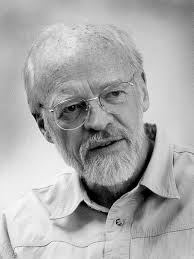
The Relationally Grounded Pastor -An interview with Eugene Peterson 

Unknown-4It’s been said that if evangelicals were to have a Pope, it would be Billy Graham. Well, if evangelicals were to appoint a Bishop, a pastor to pastors, there would be no better candidate than Eugene Peterson. The pastor, scholar, and author has impacted four generations of church leaders through his writing. Pastor J.R. Briggs interviewed Peterson about the pastor’s vocation and how to lead with your soul.

When you look at the state of the pastoral vocation, what concerns you?

One of the things that distresses me most is how much ambition there is. I’m alarmed that we measure things by what the world counts as important. We’ve lost a scriptural imagination, I fear. It’s so important for pastors to understand the Trinity, because it shows that God is totally relational. There’s no part of the Godhead that isn’t in relationship to the other parts and with us. If we don’t saturate ourselves in that relational reality, the values in this world just crowd in on us.

How did your parishioners shape the way you saw your role as a pastor?

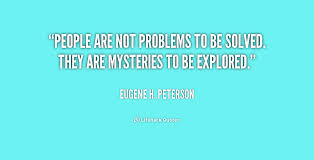
They treated me as a person of prayer, as a person of conversation. When they would come to me with a problem, I really wouldn’t deal with the problem. I got them talking about their lives in different ways, and it’s surprising how many times, after two or three times together, there was no problem. They thought the problem was the only way they could get my attention. And when it didn’t get my attention, at least not in the way they thought, then the conversations would get deeper and more intimate. I think because of the culture we live in, we almost have to disappoint people, at least at the outset, in order to get them to understand who we are and what we’re doing.

A lot of it has to do with paying attention, and listening, and praying in your listening, Lord, what is this person telling me? And then sometimes you’re able to get around the problem and find something more interesting than the problem. You know people have problems because they’re uninteresting. They want people to look at them and feel sorry for them or help them. They don’t need that. They need a friend. And if we let people define themselves in terms of problems then they get defined in our minds as problems. We have to fix them, and that’s just death for a pastoral vocation. A yellow warbler just landed in a tree outside my window.

Can you recall a time when you were able to sidestep someone’s problem to connect with them on a deeper level?

There was a young woman in my church, married with a couple of kids, and she was not well. She kept going to her doctor and he prescribed pills. Finally he said to her, “You should go to a psychiatrist. I think your problem is deeper than what we’re talking about.” She was in the hospital for three or four days at a time. I visited her in the hospital and said, “How would you like me to help you?” And she said, “Would you teach me to pray?” I nearly fell off my stool. Nobody had ever asked me to teach them to pray. And so I said, “Well, I’d love to do that.”

Unknown-5It was a critical moment for me. I decided I’m not going to be a counselor anymore. I’m going to be a man of prayer and invite other people into this. I’m not saying that cured her, but it changed the whole dynamic of what was going on. She was able to get off medication and become a very vibrant woman.

You know it’s a lot more satisfying to solve people’s problems than to teach them to pray, because you can see the evidence immediately. The marriage is saved, the runaway kid comes home. Of course you have a lot of failures, too, but when it works you can see it happen. With prayer you don’t see it happen. It’s something that gets internalized and works out through the years. You don’t know how it happens. Nobody does except maybe the Spirit himself, I guess.

You’ve been critical of what you call a CEO model of ministry. Were you ever tempted to pastor like that?

No, I was never tempted. I’d seen too many of them. I grew up in a church culture that was celebrity-driven. I never had a pastor who knew my name. I got tired of them saying, “Young man, how’s your soul today?” I didn’t even know I had a soul. All I knew is I had hormones.

In some ways I was saved by bad examples. So I was protected from that, which was a good thing because I’m very competitive. In those early years I got my identity through competitiveness, mostly in sports and academics. And that was a big thing for me, to make that transition from the ambition of doing really well to entering into relational reality with my parishioners.

Did competitiveness continue to be a challenge for you as a pastor?

When I started, I had adrenaline and ambition. I worked hard. We raised money and built this lovely sanctuary, inexpensive but still artistic. There was a lot of enthusiasm. But some of the people had quit coming to church. I’d go to see them and say, “Is something wrong? I said something you didn’t like?” And they’d say, “Oh no, pastor, who’d have thought a bunch of nobody’s like us could have built that church?”

I did a lot of fetching, but I never learned how to sit. Eventually I learned to stop asking, ‘How can I perform better?’ and to start asking, ‘How can I fit into what God is doing?’

But in six months our attendance was about half what it had been. I went to my supervisor and said, “What do I do?” He said, “Start another building campaign.” I said, “You got to be kidding.” He said, “That’s the only motivation Americans know. You’ve got to have a goal. If you don’t have a goal, you can’t do anything.” And I said, “We just had a building campaign. We just built a church.” “That doesn’t make any difference. Trust me. A goal will do it.”

Well, I left that meeting knowing I wasn’t going to do that. But I didn’t know what to do, and so I thought, Well, if I don’t know what to do, I’ll just do what I felt comfortable doing: preaching, visiting people, having them in our home. They were all good things, but I was wearing myself out. I remember thinking, I’m like a puppy dog. Somebody throws a Frisbee and says, “Get it” and I run and get it, and come back to do it again. “Fetch” was the one word I know really well. I did a lot of fetching, but I never learned how to sit. Sit. Eventually I learned to stop asking, “How I can perform better?” and to start asking, “How can I fit into what God is doing?”

What practices refreshed your soul while you were a pastor?

One of the things that made a huge difference in my life was I gathered the pastors in my neighborhood every Tuesday for two, sometimes three hours to have lunch together. We did it in my study. They weren’t all Presbyterians. I just invited everybody in the county. It was not a large county, and we had about 17 or 18 pastors. If they were in the community and they were pastor of a church, they were there.

How do you expect people to know you if they haven’t been in your home,

if they haven’t seen your kids and what kind of flowers you grow?

Borrowing a phrase from Calvin, we called ourselves “The Company of Pastors.” And we had an agenda: to help each other get ready to preach on Sunday. But if something was going on or somebody was having a divorce or a church fight or someone was just depressed, we dropped everything and talked. Talked and prayed. And that group was life-giving for all of us. At the end of the academic year, we went on an overnight retreat together where we celebrated the Eucharist at the conclusion. And that group is still going on.

I was reminded at one point of a short story by Thomas Mann. It was about a woodsman who had the same ax all his life. He was 88 years old, still the same ax. Sometimes the blade would wear out and he would replace that, and sometimes the handle would wear out and he’d replace that. But it was the same ax. That was our group. We were Thomas Mann’s woodsman. People would come and go, but it was always the same thing.

A friend I have from South Africa said, “You really don’t know somebody till you’ve been in their kitchen.” How important is it to get out into the places where people live and work?

imagesIt’s essential. When I’m on their turf, I’m looking at them, finding out what they do. When they’re on my turf, they’re looking at me, finding out what I do. I have a good friend who became pastor of another congregation, and it was a celebrity church. He started having people in his home, four or five at a time, just for conversation. Over and over these people told him “This is the first time I’ve ever been in a pastor’s home.” I think that’s tragic. How do you expect people to know you if they’ve not been in your home, if they haven’t seen your kids and what kind of flowers you grow?

From the very beginning when we received new members, we had them in our home to get to know them and their stories. Then when they joined the church, we’d meet with them in one of the elder’s homes, not in a church building, not in a place that is sacred or religious. I didn’t know what I was doing, but later saw the genius in it. As a result their capacity for relationship developed.

People ask, “How do you mature a spiritual life?” Well, the one thing you do is you eliminate the word spiritual. It’s your life that’s being matured; it’s not a part of your life. I learned through the years to not use the word spiritual as an adjective. With men, the only way I could usually get them to meet me during the week is to have lunch with them in their place of work or near their place of work.

So we would meet for lunch, and I would be able to ask them enough questions about what their work was, what they were doing, did they like it, what was hard about it, what was good about it, and they would open up. But we were not in the church. We were not in the pastor’s study. We were out in the world that they lived in. People like to be known for who they are, not for what they’re not.

Is there anything else we haven’t talked about that you’d like to share with pastors?

There’s nothing in the world that is more contextual, more sensitive than a congregation. Wendell Berry elaborates this in terms of the land, the farm. Every farm is different, and the farmer has to learn his land and treat it with dignity. There’s no vocation, I think, that’s as context-specific as the pastor. So you’ve got two contexts—your congregation and the pastor’s. Every pastor is different and should learn to be him- or herself. And every congregation is different and needs to be given dignity in being itself.

It’s crucial to insist on contextualization—the uniqueness of the congregation, the uniqueness me—instead of thinking, This is what a congregation should do and This is what a pastor should do. Forget it! Learn how to do it out of who you are, and let your congregation be the congregation it can be out of who they are.

Copyright © 2015 by the author or Christianity Today/Leadership Journal.