Are you Relational or what?

I thank God for Men and Women who carry a wisdom and are given a voice to help the maturity of the people of God to come a very good insight for NOW…read on…

The Relationally Grounded Pastor -An interview with Eugene Peterson 
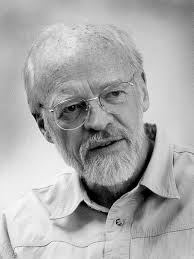
Unknown-4It’s been said that if evangelicals were to have a Pope, it would be Billy Graham. Well, if evangelicals were to appoint a Bishop, a pastor to pastors, there would be no better candidate than Eugene Peterson. The pastor, scholar, and author has impacted four generations of church leaders through his writing. Pastor J.R. Briggs interviewed Peterson about the pastor’s vocation and how to lead with your soul.

When you look at the state of the pastoral vocation, what concerns you?

One of the things that distresses me most is how much ambition there is. I’m alarmed that we measure things by what the world counts as important. We’ve lost a scriptural imagination, I fear. It’s so important for pastors to understand the Trinity, because it shows that God is totally relational. There’s no part of the Godhead that isn’t in relationship to the other parts and with us. If we don’t saturate ourselves in that relational reality, the values in this world just crowd in on us.

How did your parishioners shape the way you saw your role as a pastor?

They treated me as a person of prayer, as a person of conversation. When they would come to me with a problem, I really wouldn’t deal with the problem. I got them talking about their lives in different ways, and it’s surprising how many times, after two or three times together, there was no problem. They thought the problem was the only way they could get my attention. And when it didn’t get my attention, at least not in the way they thought, then the conversations would get deeper and more intimate. I think because of the culture we live in, we almost have to disappoint people, at least at the outset, in order to get them to understand who we are and what we’re doing.

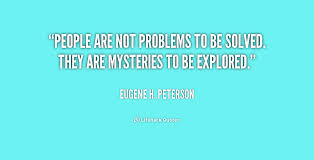
A lot of it has to do with paying attention, and listening, and praying in your listening, Lord, what is this person telling me? And then sometimes you’re able to get around the problem and find something more interesting than the problem. You know people have problems because they’re uninteresting. They want people to look at them and feel sorry for them or help them. They don’t need that. They need a friend. And if we let people define themselves in terms of problems then they get defined in our minds as problems. We have to fix them, and that’s just death for a pastoral vocation. A yellow warbler just landed in a tree outside my window.

Can you recall a time when you were able to sidestep someone’s problem to connect with them on a deeper level?

There was a young woman in my church, married with a couple of kids, and she was not well. She kept going to her doctor and he prescribed pills. Finally he said to her, “You should go to a psychiatrist. I think your problem is deeper than what we’re talking about.” She was in the hospital for three or four days at a time. I visited her in the hospital and said, “How would you like me to help you?” And she said, “Would you teach me to pray?” I nearly fell off my stool. Nobody had ever asked me to teach them to pray. And so I said, “Well, I’d love to do that.”
Unknown-5It was a critical moment for me. I decided I’m not going to be a counselor anymore. I’m going to be a man of prayer and invite other people into this. I’m not saying that cured her, but it changed the whole dynamic of what was going on. She was able to get off medication and become a very vibrant woman.

You know it’s a lot more satisfying to solve people’s problems than to teach them to pray, because you can see the evidence immediately. The marriage is saved, the runaway kid comes home. Of course you have a lot of failures, too, but when it works you can see it happen. With prayer you don’t see it happen. It’s something that gets internalized and works out through the years. You don’t know how it happens. Nobody does except maybe the Spirit himself, I guess.

You’ve been critical of what you call a CEO model of ministry. Were you ever tempted to pastor like that?

No, I was never tempted. I’d seen too many of them. I grew up in a church culture that was celebrity-driven. I never had a pastor who knew my name. I got tired of them saying, “Young man, how’s your soul today?” I didn’t even know I had a soul. All I knew is I had hormones.

In some ways I was saved by bad examples. So I was protected from that, which was a good thing because I’m very competitive. In those early years I got my identity through competitiveness, mostly in sports and academics. And that was a big thing for me, to make that transition from the ambition of doing really well to entering into relational reality with my parishioners.

Did competitiveness continue to be a challenge for you as a pastor?

When I started, I had adrenaline and ambition. I worked hard. We raised money and built this lovely sanctuary, inexpensive but still artistic. There was a lot of enthusiasm. But some of the people had quit coming to church. I’d go to see them and say, “Is something wrong? I said something you didn’t like?” And they’d say, “Oh no, pastor, who’d have thought a bunch of nobody’s like us could have built that church?”

I did a lot of fetching, but I never learned how to sit. Eventually I learned to stop asking, ‘How can I perform better?’ and to start asking, ‘How can I fit into what God is doing?’

But in six months our attendance was about half what it had been. I went to my supervisor and said, “What do I do?” He said, “Start another building campaign.” I said, “You got to be kidding.” He said, “That’s the only motivation Americans know. You’ve got to have a goal. If you don’t have a goal, you can’t do anything.” And I said, “We just had a building campaign. We just built a church.” “That doesn’t make any difference. Trust me. A goal will do it.”

Well, I left that meeting knowing I wasn’t going to do that. But I didn’t know what to do, and so I thought, Well, if I don’t know what to do, I’ll just do what I felt comfortable doing: preaching, visiting people, having them in our home. They were all good things, but I was wearing myself out. I remember thinking, I’m like a puppy dog. Somebody throws a Frisbee and says, “Get it” and I run and get it, and come back to do it again. “Fetch” was the one word I know really well. I did a lot of fetching, but I never learned how to sit. Sit. Eventually I learned to stop asking, “How I can perform better?” and to start asking, “How can I fit into what God is doing?”

What practices refreshed your soul while you were a pastor?

One of the things that made a huge difference in my life was I gathered the pastors in my neighborhood every Tuesday for two, sometimes three hours to have lunch together. We did it in my study. They weren’t all Presbyterians. I just invited everybody in the county. It was not a large county, and we had about 17 or 18 pastors. If they were in the community and they were pastor of a church, they were there.

How do you expect people to know you if they haven’t been in your home,

if they haven’t seen your kids and what kind of flowers you grow?

Borrowing a phrase from Calvin, we called ourselves “The Company of Pastors.” And we had an agenda: to help each other get ready to preach on Sunday. But if something was going on or somebody was having a divorce or a church fight or someone was just depressed, we dropped everything and talked. Talked and prayed. And that group was life-giving for all of us. At the end of the academic year, we went on an overnight retreat together where we celebrated the Eucharist at the conclusion. And that group is still going on.

I was reminded at one point of a short story by Thomas Mann. It was about a woodsman who had the same ax all his life. He was 88 years old, still the same ax. Sometimes the blade would wear out and he would replace that, and sometimes the handle would wear out and he’d replace that. But it was the same ax. That was our group. We were Thomas Mann’s woodsman. People would come and go, but it was always the same thing.

A friend I have from South Africa said, “You really don’t know somebody till you’ve been in their kitchen.” How important is it to get out into the places where people live and work?
imagesIt’s essential. When I’m on their turf, I’m looking at them, finding out what they do. When they’re on my turf, they’re looking at me, finding out what I do. I have a good friend who became pastor of another congregation, and it was a celebrity church. He started having people in his home, four or five at a time, just for conversation. Over and over these people told him “This is the first time I’ve ever been in a pastor’s home.” I think that’s tragic. How do you expect people to know you if they’ve not been in your home, if they haven’t seen your kids and what kind of flowers you grow?

From the very beginning when we received new members, we had them in our home to get to know them and their stories. Then when they joined the church, we’d meet with them in one of the elder’s homes, not in a church building, not in a place that is sacred or religious. I didn’t know what I was doing, but later saw the genius in it. As a result their capacity for relationship developed.

People ask, “How do you mature a spiritual life?” Well, the one thing you do is you eliminate the word spiritual. It’s your life that’s being matured; it’s not a part of your life. I learned through the years to not use the word spiritual as an adjective. With men, the only way I could usually get them to meet me during the week is to have lunch with them in their place of work or near their place of work.

So we would meet for lunch, and I would be able to ask them enough questions about what their work was, what they were doing, did they like it, what was hard about it, what was good about it, and they would open up. But we were not in the church. We were not in the pastor’s study. We were out in the world that they lived in. People like to be known for who they are, not for what they’re not.

Is there anything else we haven’t talked about that you’d like to share with pastors?

There’s nothing in the world that is more contextual, more sensitive than a congregation. Wendell Berry elaborates this in terms of the land, the farm. Every farm is different, and the farmer has to learn his land and treat it with dignity. There’s no vocation, I think, that’s as context-specific as the pastor. So you’ve got two contexts—your congregation and the pastor’s. Every pastor is different and should learn to be him- or herself. And every congregation is different and needs to be given dignity in being itself.

It’s crucial to insist on contextualization—the uniqueness of the congregation, the uniqueness me—instead of thinking, This is what a congregation should do and This is what a pastor should do. Forget it! Learn how to do it out of who you are, and let your congregation be the congregation it can be out of who they are.

Copyright © 2015 by the author or Christianity Today/Leadership Journal.
Community…a relational company and movement

This Christ Community, this Relational Movement is distinctive, it is  what enables us here to reflect the movement with in GOD?    I trust in reading you are inspired to discover a Relational Movement, a community to belong to.   As you read this blog, may a shout of yes I see it, yes I long for it, this mirror of how GOD flows and makes the other more important, arise within you.   There is a drawing to find this Community.    Let us ponder on some of our distinctive’s to our world.images

A community that is not self focused, one that makes the other person, people the focus of interest.   A people that care, carry each other, that believes in each other this is the community of God.   A Community where politics does not dominate, a place where security is offered and received, where people are established as to who they are.   A community where the young, the old, the mature the immature all find a place irrelevant of experience, language, culture, colour.  Where status is not gathered, where position does not dominate, where people are allowed to be people as an expression of God…what a place, the list goes on and on, dreams of people being free and empowered, responsible and accountable, caring and serving the other.   where the other is the most important.

A community that we would like to call a Christ like community, what makes it distinctive?    I hope you will allow me to offer some ideas, some of which I hope ascend to the level of theological insights.

A Christ like Community occurs when two or more people are conscious of each, make an intentional aware of others while covenanting to arrange lives around Jesus,  making his character their goal, become agents of Christ, the goal of the ‘Fathers will being done’ above his.
A real community probably does not begin to happen until one consciously commits to engage with others who want to make following, growing in, serving Christ the affinity point of their relationship.
This commitment that proceeds the conscious direction of following Jesus is one that has examined for implications, embraced, and pursued as a major priority in one’s life. Its when i have made my advance to be one with Christ and is not easily abandoned any longer.     We ask each other some strange questions some times, i am not sure if its to evaluate or se elif i am in our out?  “When did you get saved”, “when were you born again”, “when did you commit yourself to Jesus?”   We are asking each other when did we cross the line…was it when I was 16 and I first heard of Jesus, or my conversion perhaps was to please a girl, or the one I experienced when I really appreciated what giving up was like.

Jesus did have a model of community in mind that on three different times he did not expand his togetherness, in order to get number of followers.   I wonder why, was it  I’m impressed: Jesus resisted expanding his interior community lest he compromise its growing integrity of togetherness. How he instituted this is something I’d like to know. What does this all mean, its implications for us today that is?

A transformation of thinking is necessary as we have to see the Christ community as a sacred relationship.     It is is not the Lions Club, or save that cause community, neither is it a fan club community and certainly not a Facebook community.
For some of you reading perhaps the word sacred is out of place but its no less true of the Christ community, Bible interpreters and scholars who know far beyond me, read the scripture “When two or three get together in my name, I am in the midst of them.” and see it as sacramental language: the “special presence” of Christ.     In the same way as we invest importance into bread and wine at a communion, by the way this is a community building action, neither am I looking at the relativity of just a few pieces, bread, wine, of the element as the way to model this communion experience here. But as we are encouraged to “do this as often as you gather”, what takes piece of bread and cup of wine? The ‘This’ meaning much more than a service but do the whole thing, eat, celebrate, fellowship, gather, life…    Just as we affirm Christ being with us at the moment, so Jesus is present when his people connect in his name.   Can you perhaps grasp or try and think if the imaging if everyone in the room is thinking that Christ is here, what transformation that would be in our builing and infringe community.

It would change our words our conversation. Our interests in each other and expressed caring would transform and deepen. The celebration and joy would be more evident and be more electric. What would happen to honouring, it certainly would not deprecating, one another becomes a priority.   The moment would be filled with laughter, story-telling, eating, and seeking wisdom.     In my home as a child as in many in South Wales we even placed an empty chair at the table on Sundays while suggesting that it’s reserved for Jesus, for he was joining our table.

Christ community is a oneness expression of God likeness and union.
I have lived my last 40 plus years in the church and been bombarded with the thinking I have to come up to , its been intimidating and often a reason to say its too hard.  Yet we are encouraged to be ‘holy’ be ‘godly’ throughout the scripture. Wow Really!  I live in a world where we don’t find anyone really that is  comfortable with this thought ‘I and godly’, but there is so much truth there?  How many of us know anyone we would describe as godly or holy.   Can any one of us who live a real life really ascend to high holiness or godliness?   Now once having consider that let me perhaps it is meant to be by a group a community…in joint expression.    Each contributing a pice to make up the whole.  Together offering a character of God aspect and reflecting God and together being the body of Christ.   The scripture as so many together, “one another” quotes, so many “put on”, “clothe yourselves with”, perhaps bring together, kaleidoscope all these personal contributions and characters of Christ finding fullness of expression in community.  Compassion, Kindness, generosity, patience…all form many to make one.    Its just can any one person fully fill any of these out?

Enough to consider for now on this community you and I have been brought near to…?

Community Construction

“It is our care for the helpless, our practice of loving kindness, that brands us in the eyes of many of our opponents. ‘Only look,’ they say, ‘look how they love one another … Look how they are prepared to die for one another.’”

Tertullian

imagesWhat on earth had Tertullian seen, what on earth was going on during his day?  I think he had seen much more than the clambering after my ministry, the adding of title to my name “pastor”, “apostle”, or as one business card announced handed to me “king, bishop, apostle…” seriously, or attending “church” sitting in rows all facing a band and an expounder.
By the way attending”church” !!!! we cannot mean what we say…the ekklesia is what we are, what we are called not a Sunday attendance or a building but a loving people.

Ok back to the plot, its much more about a people in practical poured out life for one another.  A people that burst forth, erupt with love and care, where compassion  overflows where genuine need is encountered.   Clearly it was yet another description of community…what about our community…

I hear the cry of fatigue within the attending people of God for real relationship, for a family, a community, there will come a time that the cry will erupt outward and energise the rise of community once again.   That in todays environment a church that has become the father and mother to society as community.   It’s coming I tell you, and if it does not then there is no God working toward a declared purpose, but of course we know there is and it’s coming…

It will be heralded as we once again see a View of God that is community, a view of Father, Son and Holy Spirit that make the other more important that themselves, pouring out working for the other.   The Trinitarian view of this Divine Community becoming the dominant pattern to emulate.   The pattern to give form to church, leadership, people.   For far too long it has been a top down expression we have seen, but it is exploding,  a RELATIONAL MOVEMENT is here.   An emphasis on the model of community seen in the Covenant movement of God and we the disciples of Christ are to be the exact expression, the mirror of the union to creation.

It will all happen as we are captured again and put down a biblical pattern, realising the Divine union we have been born to, think it through as you do you will see that many organisational patterns, strategies have lost their theological, their biblical basis. Let em say struct we do require but one that enables and true reflection of a God way not best business or growth pattern. Peopel at Centre, Christ at centre a family a community as the community of God. As we discover the truth of “How good and pleasant it is when brothers live together in unity … for there the Lord bestows his blessing, even life forever more” (Psalm 133:1).

We will move from a lost expression of fellowship that has been hijacked, to meaning little more that acquaintances or a religion, to an understanding of a deep koinonia.   Not crowds but a relationship that is speaking as honestly as I can, seeing people as essential to my life, seeing we are so deeply connected, community walking covenant mirroring the flow of relationship of God.    The family of God becomes a priority, in this relationship realising that I had been given a God gift a divine lack, a gap that only another can provide, “as every joint supplies”.    Understanding  that my maturity is dependent, radically on your part that flows to me, radical. On some one else willingness to flow towards me and my willingness to flow towards them in their maturity.
Are you not tired of having to defend a ‘church pattern’ what ever pattern it may be, or one who felt the need to defend as you felt gathering was threat to the authority of the pulpit (or music stand, as the case may be) rather than it was all meant to be community, meant to express community, a family of God)

So many who attend church have dominant feelings of loneliness, humiliation and confusion with this becoming the dominant feeling.   But we are the community of God, how can this be?   A Relational Movement, how can this be, personally I have set my direction to become part of this Relational Movement,  connecting with others that long for this in the place they live ‘Family Christianity’, knowing that has always been Gods purpose and direction to have Family.

A family that are called to live by the gospel, ministries of Christ, leadership that enjoy a family rather that comparison pressure or projecting some other image that they are not, or power of project or name dropping or having to be at the right conference.   A family among all God s people that is caring and loving that the society around says “my, how they love one another”

What about finding a relationship that is always redemptive, redemptive love constantly.   Not judgement or a sudo-judgement when they use other words and say the do not judge, but don’t you feel it in the underling superiority.    A place where when you lose your direction or the inner song of God and are ready to give up, when you are broken you find a community that does not cast you aside, or think less of you, or distance quietly affirm you for some unspoken agenda.     In a community that never utter a criticism or even thought of one but a redemptive love in action..

images-1This Christ Community, this Relational Movement is distinctive, it is  what enables us here to reflect the movement with in GOD?    I trust in reading you are inspired to discover a Relational Movement, a community to belong to.   As you read this blog may a shout of yes I see it, yes I long for it, this mirror of how GOD flows and make the other more important.   There is a drawing to find this Community.    Ponder it next time we will consider why this is distinctive to our world.????

The “I” or it is a ”WE”

We are a people a community of more than two people, for it is not good for mankind to be ‘alone’ was one of the early words of conversations between the community of heaven.   Why was this not good? as the alone does not represent God, God is never singular,  never just one always in a community, a covenant of relationships, an expiration in more than one.   Mankind is to be a demonstration of this movement of God, this Divine Dance, it is not good to be ‘alone’.Unknown-4

Our community, the body is the joining of two or more people who have been intentional (Intentional is an important word for the Christ follower, a practical disposition being intentional, being intentional in our Christ likeness, life style and work), these who have agreed to cultivate their action around the ways of Jesus and intentionally love one another—caring, growing, and serving.       All are equal participants; everyone seeks to grow; everyone builds in the lives of the others; everyone understands that the ultimate purpose of the community is to display God and bring its implication to influence our larger world.

“Simple people can be amazingly powerful when they are members one of another. As everyone knows, it is almost impossible to create a fire with one log, even if it is a sound one, while several poor logs may make an excellent fire if they stay together as they burn.” 

Elton Trueblood

A life together, this covenant life of community and UNION has several expressions that demonstrates a life of God Movement;

The natural one and first one that comes to mind is a covenant, a community a demonstration of heavens way in marriage, the union of “…these two shall become one…” is an intensive experience.   Life close up, working being intentional to know each other, the depths of feeling and emotions.   Nothing kept from each other, we trust, the marriage  journey is often about finding the words to express my inner being to another, experiences and emotions to make known to your spouse whats going on inside.   No secrets, pushing each other for growth, taking with intent such experiences as cooperating, love, grace, generosity, thankfulness.   Unfortunately the catalogue of where I miss it is quite full, but there are times when we get it right.    This experience of UNION of community has done more to change me, I know it saved me as well.

Being part of a community of people who will sit together, eat together, build each other, correct each other, believe for each other, speak of joys, goals, misses and sadness, lives intricacy woven into each other.   This has been my experience,  a rich covenant with men and women, who have journey together.   No one there for their own agenda but willing to sow everything they have for a mutual community advance.    We laugh a lot together we cried together, more than that we broke things open together and for one another, as well as we saw God together.    This is no less an intentional covenant life style.

UnknownThere have been men, men who have been very close over the last 35 years that have been given to serving Christ to see the agenda of God in Restoration who have also committed to each other.   With these we spent hours together, talking personal stuff, debated what we read, provoked each other in what God was saying, scenario‘-ed’ the future, travelled together as we gave ourselves from our own personal agendas and what we had to do to be with the other person so we could spend time together, dug gardens together, repaired cars, painted rooms, mover furniture, but the centre was an outworking of God relationship.

The People I belong to, the church – ekklesia offer another opportunity for a broad experience of community.   We met in large rooms sining and listening to teaching, i cant say we discover the place of transparency in the corporate setting.    But there is something we must and cannot loose the intentionality of ‘gathering’, sharing hugs, exchanging words, knowing that this community is there for us and us for them if the circumstance necessitate it.   Its being INTENTIONAL in gathering rather than just seeing what happens , but INTENTIONAL in being corporate with people of great difference, learning to love God and express God in that one way

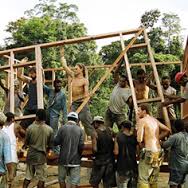
I am challenged when I come across people who have committed to live very practically in commitment, not to withdraw for a people a society but to be live in the midst of it.   I wonder if you or I could live like that?   Various degrees of common pot, may be not, but what about sharing house, what ever it is it could be to purchase a village together over time so we all live to demonstrate to a broken world a whole life style.   Not sure if I could do that  but it is covenantal and mankind not being alone.   Living close building a demonstration of care, involved lives

We have over the years  strived to be open and inclusive to many, opening our lives and home up, using our dinning table as a tool to express life together.   Having groups of people around us, pouring life out and receiving life from all who are together.     Our goal was to press into them the things we believed Jesus has taught us over these many years as well as helping them to discover this and more for themselves.     We have taken special delight in these people and consider them to be sons and daughters in the faith.

Become convinced that the word community, like marriage, ought to be reserved for collections of people who make their relationship a very sacred trust.

Community is at the core of the genuine Christian life.
It is not an optional experience but is essential
It is actually indispensable
God has many things to reveal to us that could not or would not happen if one stuck to a solo experience of faith.

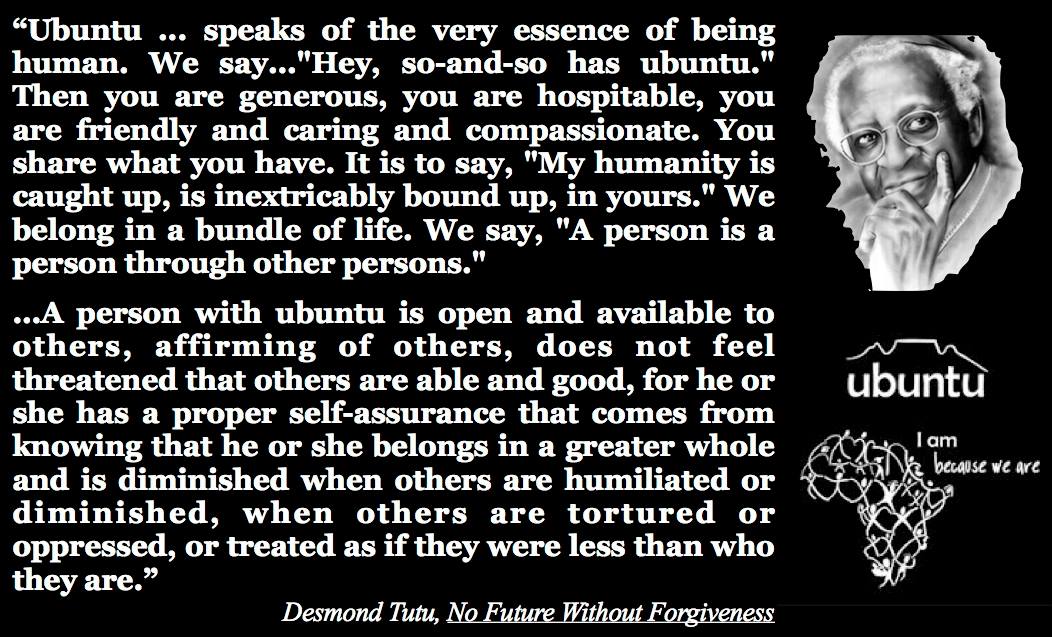
There are two African proverbs I love to consider, one Desmond Tutu used often Ubuntu a definition of “human-ness”, and is often translated as “humanity towards others,”, I am as we are…   Then there is an old African proverb which challenges my thinking. “Alone, I have seen many marvellous things, none of which are true.”   Truth—God’s voice—is best recognised and affirmed in community.

It is together that we learn what it means to be community, to be a Relational Movement, to reflect God and be God’s family.